


BUCHAREST REAL ESTATE CLUB

Shaping a New Era of Development in Southeast Europe

Members’ news: Element Development launches industrial division

Members’ news: Element Development launches industrial division 1441 1080 BUCHAREST REAL ESTATE CLUB

Members’ news: Element Development launches

industrial division

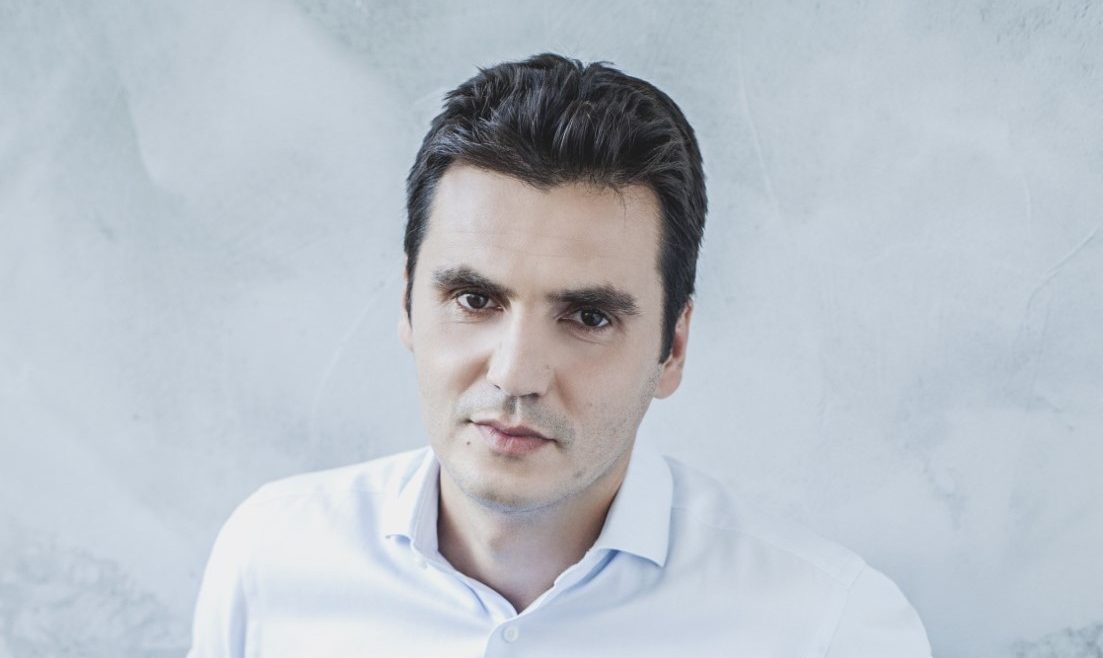
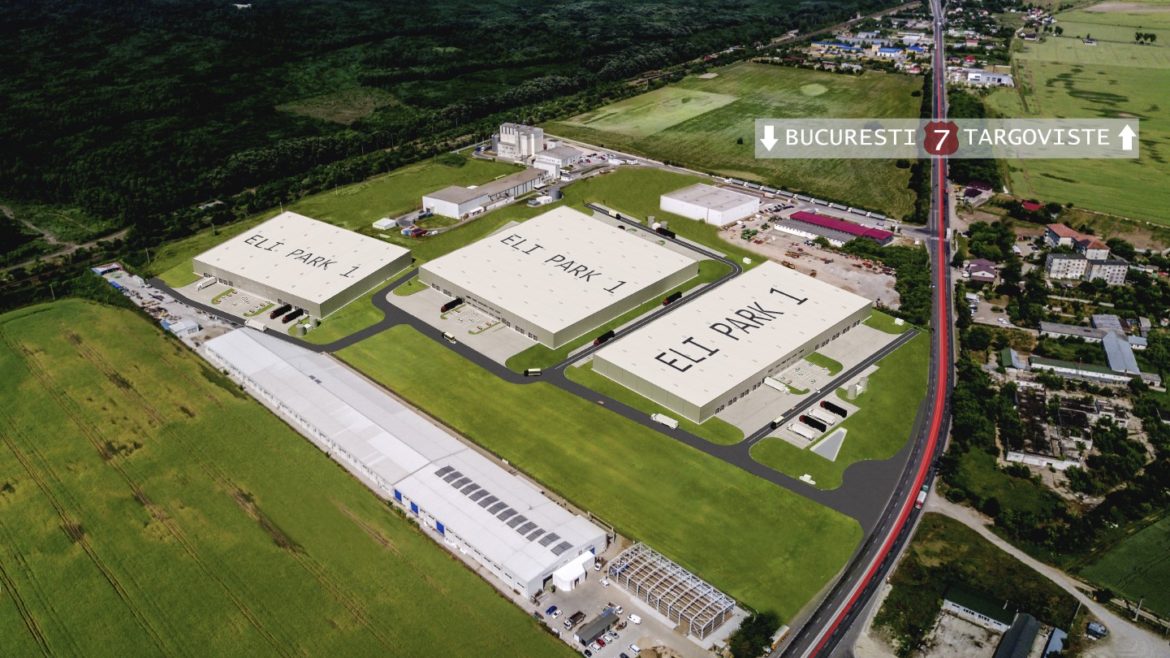
Ionuț Dumitrescu launches Element Industrial, a real estate development company focusing on logistic projects. The new company will develop a portfolio of industrial projects in Bucharest and Romania. The first is ELI PARK 1, to be built in two phases on a 10-hectare plot, on DN 7, in the North outskirts of Bucharest, Chitila area.

 “Element Industrial will develop class A logistic parks, strategically located. We have taken the decision to start this business on the premises of an increasing consumption determining the significant development of both e-commerce segment and FMCG companies”, said Muler Onofrei, Managing Partner within Element Industrial.

25 MILLION EUR INVESTMENT IN A 45,000 SQ. M INDUSTRIAL PROJECT, NORTH OF BUCHAREST

ELI PARK 1 will total a 45,000 sq. m. lettable area of warehousing spaces and offices. The first phase of 20,000 sq. m will be delivered in the second quarter of 2019. ELI PARK 1 is conveniently located 4 km from the Capital’s City Ring Road, by DN7, a four-lane national road. The main benefits are the ease of access towards North and Central Bucharest as well as the immediate vicinity of Chitila/ Buftea, an area with significant labor availability, unlike other classical logistic areas with such problems, A1 – km 14 or 23.

Muler Onofrei is one of the most experienced real estate industrial managers, with a presence of 16 years on the local market. Muler has coordinated the Industrial department within Eurisko and was the director of Romanian branches for developers such as ProLogis, Soravia or Panattoni. He holds a RICS degree in “Portfolio Management”, as well as an MBA from Kellogg School of Management, Northwestern University. Within Element Industrial, Muler occupies the position of Managing Partner, with an active role in the company’s management.

The new project will be designed and executed following strictly class A international standards, with characteristics such as 11.5 m clear height, one loading bay for each 800 sq. m. of warehouse, generous 35 mtrs truck court and numerous parking places. The minimum leasing surface is 2,500 sq. m.

Element Industrial was established by Ionut Dumitrescu, a Romanian businessman with a solid expertise on the local real estate market. Between 1997-2007 he developed consultancy company Eurisko, which was sold in February 2008 to CB Richard Ellis, the real estate worldwide leader. Following this deal, he focused on real estate development: the first project was HQ Victoriei, a class A business center near Victoriei Sq, sold in 2012 to Zeus Capital. Begining with 2017, Dumitrescu partnered with the founders of One United to establish a new office division, One Office.

(23.08.2018)
Ben Adams, Founding Director, Ben Adams Architects

Ben Adams, Founding Director, Ben Adams Architects 3540 5034 BUCHAREST REAL ESTATE CLUB

BREC Talks to Ben Adams

Founding Director, Ben Adams Architects

``Office buildings need to be interesting, creative, non-standard and exciting to be in. Bucharest is still building largely boring buildings and needs to wake up to the demand for better buildings that let at higher rents..``

Established in 2010, Ben Adams Architects has quickly developed a reputation for elegant, contextual architecture balancing function with an appropriate degree of innovation and flair.  With offices in London and Los Angeles, the architectural studio has in its portfolio clients such as Nobu Hotel, Derwent London, The Science Museum, Great Portland Estates etc. The company’s founder, Ben Adams, has recently visited Bucharest for un upcoming project and shared with BREC his opinions on the development of the city.

Bucharest is now experiencing a “natural gentrification” phenomenon. How do you see the potential of historic, industrial buildings in Bucharest? What successful examples did you develop/ see?

Bucharest is a beautiful city, with a long history and a unique position in Europe between the ‘old’ countries of Western Europe and the new frontier to the East. Bucharest should position itself as a vibrant mix of old and new, with so many opportunities for those looking to make a difference. Be brave.

The historic buildings and industrial heritage of Bucharest are one of its most powerful assets.

We have seen Brooklyn explode with developments in old Industrial neighborhoods, and Shoreditch in east central London is now one of the most desirable parts of the city in which to live and work. Making something new by reinventing your heritage has driven development in London, New York, Chicago, Berlin and many other successful cities in the last twenty years. Bucharest needs to embrace this process and recognize how powerful it is as an engine of change. We are working on a huge re-use project in Grivita that is a great example of this phenomenon.

You have recently visited Bucharest – what type of projects do you think Bucharest can accommodate now? What idea would you give a developer to build together with you in Bucharest?

I think the market in Bucharest is maturing as new office buildings, shopping malls and residential projects appear in different parts of the city. What I haven’t seen is the kind of characterful mixed-use buildings that are common in cities like London and Los Angeles. They can be large or small, and the mix of uses is what makes local neighborhoods desirable, interesting and also valuable.

What should Bucharest do to attract international investors (let`s say, your clients from London)?

I think Bucharest needs to shout about its growth and the returns that are on offer from what is a low commercial basis. It means you can acquire land at low cost and build projects in phases according to demand. I know that a lot of office space in Bucharest is pre-let before the buildings are begun, or complete, and this suggests that there is a big opportunity for investors in speculative buildings that stand out from the crowd.

What`s your proposal for economically efficient office buildings? How would you help a developer maximize his investment through architecture?

Office buildings need to be interesting, creative, non-standard and exciting to be in. For many years the office market was boring and repetitive and then everything changed about ten years ago in London, New York and Los Angeles. Bucharest is still building largely boring buildings and needs to wake up to the demand for better buildings that let at higher rents. There is some evidence of this happening near the Government in Piata Victoriei but it is an exception for the moment.

(31.07.2018)

Adrian Untaru – Co-founder, ADNBA

Adrian Untaru – Co-founder, ADNBA 1103 666 BUCHAREST REAL ESTATE CLUB

BREC Talks to Adrian Untaru

Co-Founder, ADNBA

``We have many small developers that don’t allow the risk to get out of a pattern and, in this way, we have an excess of similar products. The demand for new homes is high, whatever there is on the market is being sold and we produce what has been sold.``

With an experience of 15 years, ADNBA has established a reputation as a creative designer for residential compounds, being responsible for projects such as Urban Spaces, Occidentului 40, Forte Partners’ Aviatiei Park or Avalon Estate of Prime Kapital. As residential sector is rapidly developing we took the opportunity to question the co-founder of the architectural company, Adrian Untaru about the challenges of this new evolution.

How do you evaluate the evolution of the residential market in the last couple of years, as regards the requests of developers towards the designers?

We think there are too few examples of projects developed on long term, projects with mixed functions, much more suitable to a coherent development of the city. We don’t have a strategy for the city’s development. We have many small developers that don’t allow the risk to get out of a pattern and, in this way, we have an excess of similar products, wit no possibility of being differentiated. The demand for new homes is high, whatever there is on the market is being sold and we produce what has been sold.

Do the developers pay more attention to the design stage?

Yes. There is indeed a bigger involvement of developers in the design stage. Their experiences have probably shown that a project not thoroughly designed has small chances to go well. Also, the increasing competition on the market is probably the single benefit of this intense residential demand.

Do you receive requests for developing communities and not necessarily residential condos, as they have been perceived up to now?

We do receive those type of requests, but there are more likely exceptions. We have recently been involved in the development of such a project. A design process which took 18 months for an 8-hectare plot. There we had the opportunity to create a community as we envision, with a housing mix specific to a community, where we have individual and in line houses and apartments in low rise buildings, all of those along a service area, a club, a kindergarten, and a park accessible to all residents. We would like to see more approaches of this type and we refer here to a long-term development strategy.

How do you think the new quality residential developments in Bucharest will look like in five years from now? What architectural trends we will see? And what types of facilities there will be offered?

We believe, or better said we hope for a quality increase of the new residential developments. And we do not refer here to a more expensive finishing, which doesn’t necessarily lead to a different way of living. We hope for an education of consumption towards the quality of the living space, towards a building in which we enjoy staying as well as we enjoy looking at it. Homes are, for most of us, the most important investment during lifetime. The way these homes pass the time test directly influences the investment. This can go up or down, according to the overall quality of the entire project. And in the last couple of years we have noticed many examples in both cases, enough to help this economic education we need so badly.
On the other hand, is possible that the new generations to be more mobile and to prefer to rent, instead of buying. In this situation it would be much easier to change a home in a less qualitative project. This process could lead to new opportunities on the market: specialized entities which own and professionally administrate residential assets; a qualified client able to evaluate the sustainability of a new development.

In conclusion: integrated developments, probably of big dimensions, with common facilities which will bring a plus in quality living, responsible developed.

(3.07.2018)
Laurențiu Lazăr – Managing Partner & Director Investment Services, Colliers International Romania

Laurențiu Lazăr – Managing Partner & Director Investment Services, Colliers International Romania 1720 1704 BUCHAREST REAL ESTATE CLUB

BREC Talks to Laurențiu Lazăr

Managing Partner & Director Investment Services, Colliers Romania

``Romania has been historically a market searched by speculative investors, but we can notice this trend changing. We can see a stronger interest from institutional investors, which look for large buildings and excellent tenants.``

The local branch of worldwide real estate services company Colliers has a history of more than 20 years on the Romanian market, offering a complete range of real estate advisory services. We took the opportunity to conversate with company’s leader about the investment market and new players on this segment.

How do you evaluate the quality of the real estate products developed in the last years? What advices would you give to developers in search for investors?

The quality of the traded real estate products has significantly improved in the last couple of years. The products that are already sold are at the same quality with those in CEE and Western regions. Also, the quality of tenants has constantly improved. We see new, large companies entering Romania, while local ones are developing at fast pace.

All of these factors translate into a strong demand for offices, retail and industrial spaces. The quality of the building and of the tenants are obvious criteria for attracting new investors. Nevertheless, developers don’t have reasons for unrealistic price expectations, as investments yields for office buildings in Bucharest are at the level of regional cities in Poland. And this gap will be reduced gradually, and not suddenly.

What are the main factors influencing the local investment market in 2018?

Investors’ appetite for real estate assets is obviously increasing as compared to last year, with the office sector taking the lead. In the first semester there have been two major deals and we believe other large transactions will follow.
The appeal of the Romanian real estate sector is given by the local vs regional yields differentiator as well as the effervescence of the local business environment, a fact acknowledged by the impressive economic increase (6.9% in 2017, the biggest in European Union).

What is the profile of the foreign investor that will enter the Romanian market and SEE region? Local/regional platforms or more likely from areas such as USA/Asia?

Romania has been historically a market searched by speculative investors, but we can notice this trend changing. We can see a stronger interest from institutional investors, which look for large buildings and excellent tenants. Of course, an effect of the market’s development is attracting top investors from regions which have not been yet extremely active on the local market (including North America and Asia).

Do we have products on the market at the standards of large, institutional investors? What must be done to attract new investment platforms in Romania?

In 2017 we had a reduced number of products at the standards of institutional investors, but beginning with 2018 we have a much larger offer. The most common opinions from them are referring to the predictability of Romania’s economic policies. I believe we need more stability in this regard to attract more institutional investors. In other words, the eternal story of structural reforms still remains on the agenda. The most important ones would be the improvement of the educational system and the development of the terrestrial infrastructure (especially roads and railways), which would significantly progress the perspective of the local economy on a longer term and, implicit, would also create new opportunities for the real estate segment.

(28.06.2018)

Residential sector: as competition sharpens, quality increases

Residential sector: as competition sharpens, quality increases 1754 1241 BUCHAREST REAL ESTATE CLUB

Residential sector: as competition sharpens, quality increases

While investors agree the commercial segment of the Romanian real estate market has matured, with numerous qualitative developments delivered in the last couple of years, BREC takes a look at the residential segment where new, interesting moves take shape.
The general old, outdated stock of residential developments in Romania, built mainly before the 1990s, that have become inappropriate for living to the young urban, dynamic generation combined with the country`s general positive macroeconomics are the main drivers of the residential development. The Capital’s city poor public transportation infrastructure drives workforce to buy homes closer to their workspaces.

“In the last couple of years we can notice a bigger involvement of developers in the design stage. Their experiences have probably shown that a project not thoroughly designed has small chances to go well. Also, the increasing competition on the market is probably the single benefit of the intense residential demand”, Adrian Untaru, co-founder of architectural firm ADNBA told BREC.

If during 2014-2016 (the first years of market’s return) we could notice only a few qualitative projects and those were addressed mainly to the luxury niche, now there are more and more developments announced, which impress through architecture, interior design and facilities for residents and target the upper-premium segment.

The transaction prices in Bucharest are now at a level of 1,500 – 2,000 EUR/ built sq. m, excluding VAT on the upper-premium segment, while the luxury units are traded for prices ranging between 2,000 – 2,500 EUR/built sq. m, plus VAT.

FROM RETAIL TO RESIDENTIAL

Prime Kapital (the company founded by Martin Slabbert and Victor Semionov, known in the market for the development of NEPI) has recently announced an ambitious project, in the proximity of Barbu Vacarescu office hub: Avalon Estate. The new development will span over 8.1 hectares, with 3 major categories of units and facilities such as a Club house and lake access, 1.3 ha of park with play areas for children, 24-7 security and car-free alleys ensuring safety of the community within a well-designed urban concept. Avalon will be delivered in two phases: in 2021 and 2024.

The project offers many valuable benefits – privacy, security, low density and low traffic volumes. It also features an opportunity to establish new roots in private village-type setting that offers a mix of housing types that minimize repetitive form from a design point of view,” said Maggie Kitshoff, Residential Partner Prime Kapital.

TIRIAC COMES BACK IN RESIDENTIAL

The real estate arm of the group owned by local businessman Ion Tiriac announced plans to resume residential projects. The company previously delivered Stejarii luxury compound in Baneasa and Residenz in Chitila. The company’s newest ambition is an urban regeneration project on a former industrial plot (IFMA) neighboring the North Railway station.

The architectural concept of Outbox Studio proposed numerous residential units from towers up to 80m height to low height buildings with terraces homes, vertical gardens and rooftop swimming pools. The project will address the corporate tenants of the recently created Center-West office sub-market. The company also plans residential developments in secondary cities such as Timisoara and Brasov.

ONE UNITED PROPERTIES, THE MOVERS & SHAKERS IN PREMIUM SEGMENT

The company co-founded by Andrei Diaconescu and Victor Capitanu is today one of the most active real estate developers, in the exclusive Central-North area of Bucharest.

One United Properties has finalized 376 apartments until 2018 and has another 453 units planed for construction.

The flagship project of the company is One Floreasca City, a mixed development with a class A office building – One Tower- and 3 exclusive blocks of design apartments – One Mircea Eliade. Within the same development, Auchan Romania will restore and modernize the former Ford factory in a contemporary retail space.

Other future projects include One Herastrau Towers (at the junction of Nicolae Caramfil and Aviator Alexandru Serbanescu) and One Verdi Park (on Barbu Vacarescu, near Verdi park).

BRISTISH-BASED LORECO CREATES NEW COMMUNITY IN THE NORTH OUTSKIRTS

British-based Loreco Investments envisioned a villa community in a quiet and green area from Balotesti, in the North outskirts of Bucharest. The design and urbanism phase spanned over two years, comprising the land and green spaces’ allotment, infrastructure, playground and other amenities in the park. Dumbrava Vlasiei is to be developed on a 90-hectare plot as a five “urban villages” interconnected by a green corridor.

The developer puts up for sale a diversified mix, from pre-fabricated Huf Haus models to villas designed by Romanian architects offering unicity, but also respecting the major urbanism plan of the entire community. The developer has invested 50 million EUR up to now in Dumbrava Vlasiei, his plan being to reach 1,000 units.

FIRST LOFT APPARTMENTS IN BUCHAREST

After its first residential compound on the local market developed in the South area of the Capital (The Park), Lithuanian-based Hanner now addresses a new development on the former Grivita brewery plant, in what seems to be Bucharest’s next real estate hub: the area neighboring Basarab overpass. The development will bring a new product on the Romanian residential market: 31 unique lofts to be built on the structure of one of the former historic building – Maltarie.

A true (hard) loft is a conversion of a vintage factory or warehouse. They have a harder edge as they are usually constructed of concrete or “mill” construction of exposed brick, original wood posts, beams and floors”, the company’s representative stated.

FROM OFFICE TO RESIDENTIAL

After they have build a brand as an office developer, local developer Forte Partners has announced project on the residential sector. The company has finalized last year a boutique project, Londra 27, and is now building the first phase of Aviatiei Park, a condominium addressing the upper-premium segment of the market.

Located in the north of the capital, in an urban fabric which concentrates a variety of new technological activities, the project responds to a young public necessities of finding a place to call home near their professional area. The apartments diversity, the elegance of common spaces and green plazas define an elaborate and welcoming residential complex which complements the identity of Aviatiei neighborhood” the company’s official stated.

 “We hope for a quality increase of the new residential developments. And we do not refer here to a more expensive finishing, which doesn’t necessarily lead to a different way of living. We hope for an education of consumption towards the quality of the living space, towards a building in which we enjoy staying as well as we enjoy looking at it. Homes are, for most of us, the most important investment during lifetime. The way these homes pass the time test directly influences the investment. This can go up or down, according to the overall quality of the entire project. And in the last couple of years we have noticed many examples in both cases, enough to help this economic education we need so badly”, Adrian Untaru of ADNBA concludes.

With such developments under way and other also under designing phase, we can say the residential segment is taking the right steps towards maturity, bringing a new qualitative stock on the market in the following two to five years.

Back to top

Members’ news: CA Immo buys first phase of Campus business park

Members’ news: CA Immo buys first phase of Campus business park 1745 1440 BUCHAREST REAL ESTATE CLUB

Members’ news: CA Immo buys

first phase of Campus business park

CA Immo has acquired the first phase of Campus, the business park developed by Skanska in Center West Bucharest.  The transaction volume is around 53 million EUR. Campus 6.1 is an A-class office development, offering 22,000 sqm GLA. Completion is scheduled for Q3 2018; full occupancy of the building is expected by the end of the year.

 “Having acquired Millennium Towers in Budapest in 2016 and Spire Building B in Warsaw in 2017, we continue to pursue our target of continuous development and expansion of our CEE core market portfolios with the purchase of Campus 6.1 in Bucharest. The multi-tenant property is very well located and will be nearly fully let by takeover, clearly supporting our overall financial goals”, said Andreas Quint, CEO of CA Immo.

Campus 6.1 is the first phase of a four-building office complex Campus 6, the second Skanska’s development in Bucharest.

Campus 6.1 will comprise approximately 22,600 sq. m. with 11 floors above ground and two levels of underground parking, including an intelligent parking system.

Located at the intersection of two main boulevards, Iuliu Maniu and Vasile Milea, the property benefits from great visibility and exposure, having good access to public transportation.

The metro station is just across the street and trams as well as buses within 50 metres distance.

The property will feature a range of services such as a restaurant and a cafeteria with terraces as well as co-working green spaces equipped with multipurpose furniture and electric sockets and Wi-Fi.

Moreover, the property will be equipped with an intelligent building management system consisting of e.g. an IT Hub in the reception area, a dashboard showing consumption per tenant/floor as well as a virtual reception (check-in and access control for visitors).

A mobile app will connect all the services in the building and in the neighborhood delivering e.g. building info, event news and offering features such as food delivery, car sharing and maintenance help service.

Shared e-car facilities are available for tenants, as well as a Bicycle rental, which is located in front of the building. Bicycle facilities within the building include lockers and showers.

The closing of the transaction is subject to the conditions usual for such transactions and is expected end of 2018.

TOP 10 OFFICE DEALS, Q1 2018

TOP 10 OFFICE DEALS, Q1 2018 2000 1019 BUCHAREST REAL ESTATE CLUB

TOP 10 OFFICE DEALS, Q1 2018

The biggest ten office deals in Q1 2018 total 39, 373 sq. m, the podium concentrating two projects: one in CBD – Day Tower and the other one with two deals in Central West – The Bridge. The total gross take-up in Q1 amounts for 70,000 sq.m, while monthly prime office rent is at the level of 18,5 EUR/sq.m according to data by JLL. BREC compiled this top based on the information released on the market by developers & brokerage companies.

DAY TOWER – 11,500 SQ. M, PRE-LEASE

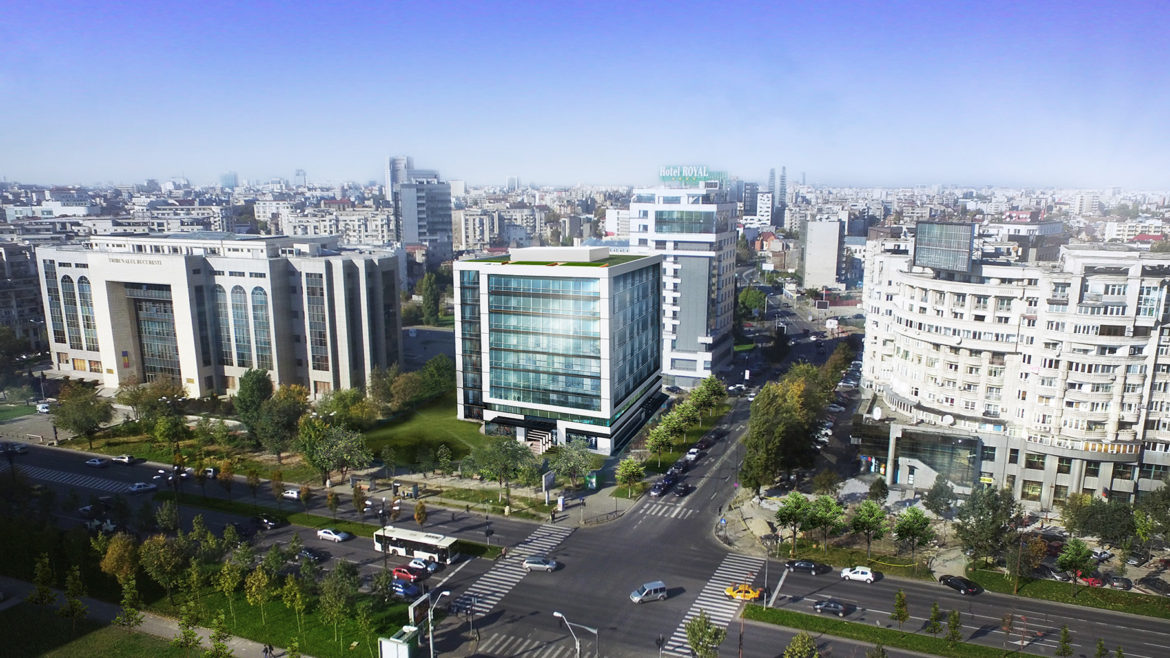
The first place goes to Day Tower, the office project of Greek-based Day Group, for the pre-lease deal of 11,500 signed with a company active in the energy sector. The new business center is accessible from Unirii Bvd, neighboring the Court Law Building. With nine above the ground floors, Day Tower was particularly sought after for its visibility in a dominant area of Bucharest. The new tenant will occupy the entire building, which is to be finalized in Q3 2018.

THE BRIDGE 2– 6,000 SQ. M, PRE- LEASE

Colliers Romania assisted UPC in the 6,000 sq. m leasing deal at The Bridge 2, the second phase of the business park Forte Partners is developing in the Center-West submarket, near the Basarab overpass. The new space will be the headquarters of the company, thus consolidating operations from two locations, the Nordului office and the one from Sema Park, starting in 2019. “After nearly a decade in its current locations, our client took a strategic decision by relocating its headquarters in a booming office area. This emerging office pole was chosen by our client given the potential of increasing its employees’ satisfaction”, said George Didoiu, Associate Director Office Agency at Colliers International Romania.

THE BRIDGE 2, 4,500 SQ. M, PRE-LEASE

The same building is the protagonist of the third place in our top, as C&W Echinox assisted Forte Partners in a lucrative 4,500 sq. m pre-lease deal, a relocation from a non-competitive stock.
The Bridge office project received the highest LEED Platinum scorecard certification awarded by US Green Building Council (USGBC) for a Romanian property. The Bridge 2, with a leasing office area of 21.000 sqm, is under construction and will be delivered in the last quarter of 2018.

CITY GATE, 4,050 SQ.M, RENEWAL & EXPANSION

E.ON renewed its 2,800 sq. m. office space in the City Gate project in Expozitiei area and also expanded with another 1,250 sq. m in a deal coordinated by C&W Echinox. The two towers dominate the square in front of the main Expo building in Bucharest, the area configuring as a new business hub in Bucharest.  In 2016, GTC successfully streamlined the ownership structure of the whole complex by buying out its minority partner, Bluehouse Capital and now owns 100% of the equity.

WEST GATE, 2,600 SQ.M, RENEWAL

BRD, one of the main players in the Romanian banking industry, renewed its office lease contract in West Gate, the business park owned by local developer Liviu Tudor.
West Gate is one of the largest business parks in Bucharest, developed by Genesis Development, in the West part of the city, on Precizei Blvd. West Gate has five buildings with 15,000 sq. m. rentable area per building of high quality Class A offices and ancillary accommodation.

CORESI BUSINESS PARK BRASOV, 2,300 SQ.M, PRE-LEASE

Cerner, the IT solutions provider for the health care industry, with its Romanian HQ based in Brasov pre-leased a 2,600 sq. m space in Coresi Business Park, in a deal brokered by C&W Echinox.
Coresi represents a complex regeneration scheme of former Tractorul industrial site, assumed by Immochan, on a size of over 100 hectares, comprising of a shopping mall, residential compound and a business park.

S-PARK/MY HIVE, 2,300 SQ.M, EXPANSION

ING expanded with another 2,300 sq. m. its office from my-Hive/ S-Park, the business park owned by Immofinanz, near Presei Libere Sq.

It comprises of 34,000 sq. m class A office space.

Immofinanz announced at the beginning of 2017 an investment plan of 1.8 million EUR to modernize five of its office properties and rebrand them under its corporate office brand, my-Hive.

Following this modernization, S-Park benefits of a spacious lobby with relaxing and socializing areas, as well as other numerous facilities.

TIMPURI NOI SQ, 2,123 SQ.M, RELOCATION

Fortuna, the company active on the online betting segment, relocated its office at Timpuri Noi Square, the project developed by Vastint in the Center-South area of Bucharest. The first phase of the project comprising two office buildings of 32,000 sq. m are 90% leased. Construction works for the second phase are underway, scheduled to be finalized by year end.

BUCHAREST BUSINESS PARK, 2.000 SQ. M, RENEWAL

C&W Echinox assisted CA Immo in the 2,000 sq.m renewal deal for Carpatcement at Bucharest Business Park.

The four buildings within the classically designed business park each offer some 27,000 sqm of office space on five levels, while being surrounded with greene areas.

The property is located in Presei Libere Sq.

GRAND OFFICES, 2,000 SQ.M, RENEWAL

Pharmaceutical company Teva renewed its office deal in Grand Offices, the business centre within JW Marriott Hotel from Bucharest.

The property has 11, 000 sq. m. office space distributed on 10 floors, with flexible floor plates from 24 sq. m.  up to 1.200 sq. m.

Back to top

Members’ news: Element Development finalizes Bistrita Retail Park

Members’ news: Element Development finalizes Bistrita Retail Park 1600 1200 BUCHAREST REAL ESTATE CLUB

Members’ news: Element Development

finalizes Bistrita Retail Park

Romanian-based real estate company Element Development has finalized construction works at Bistrita Retail Park, totaling an investment of 9 million EUR. Located on 13A Moldovei street, Bistrita Retail Park is a 7,850 sq. m shopping gallery in a city of 81,000 inhabitants, 100 km North-West of Cluj-Napoca.

“With an 90% occupancy rate and an excellent location, in the city’s new retail hub, near the farmer’s market, Selgros, Altex and Penny, we are convinced we have delivered a competitive product on the market”, said Ionut Bordei, CEO, Element Development.

Carrefour, Churreria Julia, Metropolis, Money Chest and Salad Box have already opened the new units, while JYSK will inaugurate on 31st of May. The other brands will open the new stores in the following weeks, as fit-out works will be finalized.

The new shopping gallery has a diverse mix, comprising of super market (Carrefour Market), sports retailers (Decathlon & Sportisimo), furniture & home-deco products (JYSK, Lem’s, Top Shop), restaurants (Churreria Julia, Noodle Pack, Salad Box and Spartan), toys store – Dinoland, farmacy – Help Net, exchange – Money Chest, pet-shop – Zoo Center and gambling – Metropolis. Bistrita Retail Park addresses a catchment area of 150,000 persons from the city and its surroundings.

The general contractor of Bistrita Retail Park was the local company, Campeador, while Vitalis was the project manager. The exclusive leasing agency was CBRE Romania. The project was financed by Garanti Bank.

Roxana Dudau, Associated Partner, Noerr

Roxana Dudau, Associated Partner, Noerr 800 642 BUCHAREST REAL ESTATE CLUB

BREC Talks to Roxana Dudau

Associated Partner, Noerr

“There is an increased interest in high quality mixed use projects -mostly involving urban regeneration or reconversion of former industrial platforms- as well as for smart city technologies not only in Bucharest but also in regional cities.“

Roxana Dudau, Associated Partner heads Noerr’s Real Estate & Construction Department in Romania. She is a well-known & reputable real estate expert on the Romanian market. BREC talked with Roxana about the main factors influencing the local real estate investment market, the quality of the products and the pottential of each sector.

Which are the main factors influencing the local real estate investment market?

Apart from the global factors, i.e. global economic fragility, political uncertainty and the global financial environment, the refugees’ crisis, looming trade wars etc. which are com-mon for the entire region, the main local factors influencing the investment market in Romania remain the fiscal and legal unpredictability (amendments in these fields being constantly passed by the authorities), cumulated with a labor-force shortage that pre-vents companies from further growth. Fiscal uncertainty, namely incessant fiscal amendments triggered by the Government’s in-tention to fill the holes in the budget, has a direct negative impact on investors (also in the real estate field) and remains one of the main factor influencing local investment this year as well.

Other fiscal provisions affecting the investment market are the increase of mini-mum wage and the transfer of the social contributions from the employer to the employ-ees.
The relevant legislation for the real estate market seems to be targeted by the authorities, as well, as some law drafts aiming at structural amendment of the construction law and its methodological norms, as well as the preliminary theses of a unified construction and town planning code were recently in public debate.

How do you find the quality of the real estate products developed in the last couple of years? What piece of advice would you give to developers looking to attract investors?

It is clear that the quality of the real estate products developed during the last years in-creased tremendously. All new projects envisage to obtain a green certification, and this is pursued starting with the inception phase. This applies not only for office buildings, but late-ly also for retail and residential products. There is an increased interest in high quality mixed use projects (mostly involving urban regeneration or reconversion of former industrial platforms) as well as for smart city technologies not only in Bucharest but also in regional cities.
The most important piece of advice for investors (especially for larger investments involving urban regeneration) is to conduct a local survey with the aim to involve the local community in the process of creating the concept of the new investment or adapting it to local needs and also to establish a direct communication with the local decision makers/authorities to identify the best means to include the new investment within the larger urban plan of the lo-cality. Big projects often require a strategic approach of extending the existing infrastructure or creating a new one to sustain the new needs resulting from such investments.

What type of products are most sought after by investors in 2018?

I think the office sector shall further expand in 2018. The retail segment will expand as well, but mostly in the regional cities and in smaller schemes, as in Bucharest no new large pro-jects have been announced (except for some extensions). The star of the year 2018 seems to be the residential sector, which will likely record the fastest growth.

5 Things to Consider when Looking to Lease a New Office Space in Bucharest

5 Things to Consider when Looking to Lease a New Office Space in Bucharest 500 308 BUCHAREST REAL ESTATE CLUB

Looking to Lease a New Office Space in Bucharest?
5 Things to Consider when Dealing with Landlords and Real Estate Brokers

Either you are a local or multinational office space occupier, your business needs to have a perfect match when it comes to occupying an office space, especially under today`s costs optimization constraints and qualified workforce shortage.

Before office search and negotiation process become a multiple-resource sponge, here are a few main factors to consider for navigating in the Bucharest office market:

Assign a Senior Project Manager/ Relocation Committee from inside your company

Consider Office Relocation as a strategic project, as it actually is. It impacts your yearly cashflow, employees satisfaction and retention rate, reputation in the market, positioning towards the company`s stakeholders and potentially production/ supply processes. For leading all the phases of office search and negotiation, choose the person/ team in charge based on these essential characteristics: ethics and integrity, negotiation skills, attention to details, strategic thinking, financial understanding, leadership and accountability and, nevertheless, soft skills. Simply think at the amount of your yearly office rent invoice – would you let a process impacting your yearly cashflow in some unexperienced hands?

Do your Homework. Go with a Pro

If your company policies allow you to carry on an agency pitching process, write down a comprehensive brief (with multiple viewpoints from all the internal company stakeholders – i.e. Purchasing Department, Financial, Administrative, HR, Strategy, Public Relations, etc.) and organize a Real Estate pitch for choosing the Real Estate brokerage company that best matches the attributes that are relevant for you (i.e. market know-how, advisory approach, client servicing).  CBRE, Colliers, Cushman & Wakefield Echinox, Knight Frank, JLL or BNP Paribas Real Estate are among the top brokers on Romanian market, but nevertheless a smaller-sized, local agency can also do a good chemistry with you, depending on your company`s needs.

Gross Lease or Net Lease?

Dig the financials and hidden costs, you don`t only pay for what you see. A good advisor or building landlord will be very transparent in explaining all costs triggered by office space leasing (i.e.  maintenance costs, utilities, rent for un-used areas, etc.) – but nevertheless, consider that everybody wants to upsell – so you should better do your financial homework or at least ask the right questions.  Most leases are gross leases or triple net leases. A gross lease means that the tenant pays the landlord one sum and the landlord is responsible for payment of real estate taxes, insurance, and maintenance expenses. In a triple net lease, the tenant pays a set rental amount to the landlord, but also pays a share of the landlord’s real estate taxes, insurance, maintenance expenses, and building utilities.

Independent / Local Landlord or Corporate Building Owner?

It depends on your strategy. Independent, non – institutional developers in Romania tend to be more flexible in various aspects of the negotiation, which turned out to be convenient in many cases (a typical example: when a tenant wants to break the contract exit clauses and leave the building earlier). On the other hand, typical corporate building landlords are well experienced in assets management, corporate clients servicing, hold high standard buildings and facilities, but may come in package with low flexibility or very restrictive contract clauses.

Look well in the Track. Challenge your Advisors and Building Owners

Do they have a portfolio of happy clients/ tenants? Do you know any of the tenants they present in their portfolio, so you can ask for references from the source? Is the building almost fully occupied or is there a large vacancy rate – and why? Why did the last tenant leave the building? Try to gather as many as possible background information and references – a well possible informed decision can spare valuable €€€ and un-necessary future efforts.

Need more insights on the Bucharest Real Estate market? Get in touch with us at bucharest@brec.ro.