



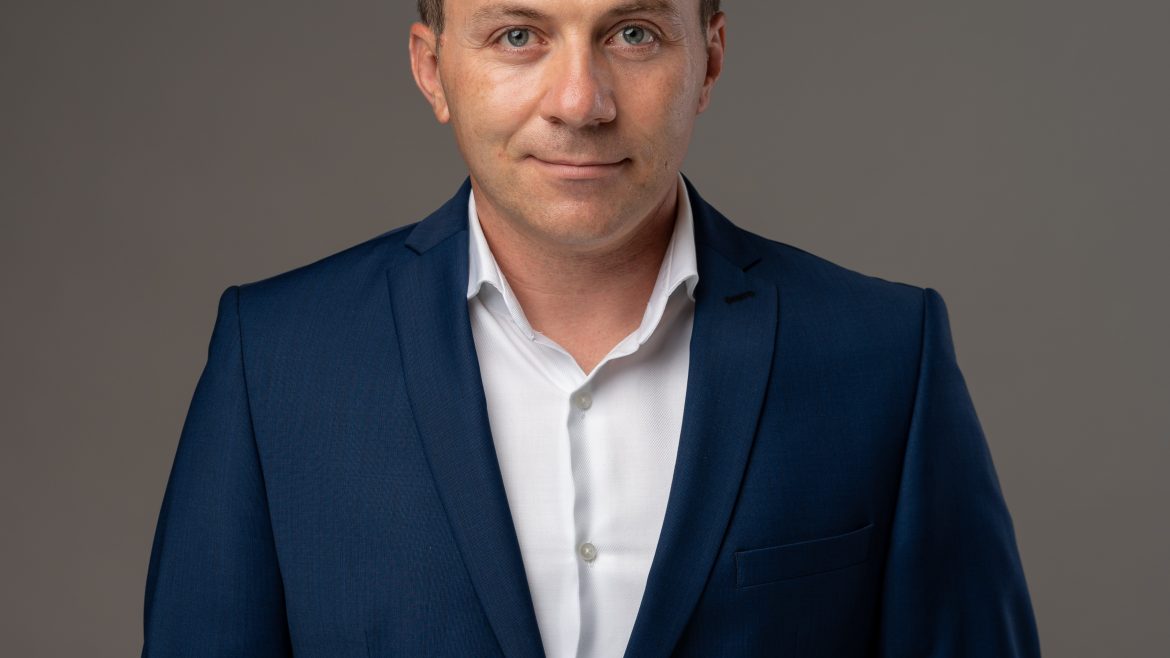

Ashton Topolinski

2026 Trends with Ionel Purice, Genesis Property

2026 Trends with Ionel Purice, Genesis Property 596 600 BUCHAREST REAL ESTATE CLUB

18.02.2026

Ionel Purice, CEO, Genesis Property

What were the main business results for 2025?

2025 was a year of consolidation and validation for our long-term strategy. Despite a volatile economic environment marked by fiscal uncertainty and shifting workforce dynamics, our business results exceeded the expectations set at the beginning of the year. Demand for high-quality, flexible office environments remained resilient, particularly from companies prioritising employee experience, sustainability, and long-term stability.

A key milestone was the signing of a long-term lease agreement with Procter & Gamble Romania, a strategic commitment that reinforced YUNITY Park’s positioning as a premium business. In parallel, the continued transformation of YUNITY Park and West Gate Business District allowed us to adapt our offering to new work rhythms and cultural shifts within organisations. From a sustainability perspective, receiving in 2025 the GRESB “Green Star” rating for the second consecutive year confirmed the robustness of our ESG strategy.

Overall, 2025 demonstrated that investments in people-centric design, sustainable infrastructure, and operational excellence remain strong differentiators, even in a cautious market.

What are the company’s business targets and plans for 2026?

For 2026, our business strategy is built around three core priorities. The first is the continued development and consolidation of the YUNITY Park ecosystem, with a focus on completing new facilities and accelerating projects that support wellbeing, energy efficiency, and community engagement. These investments aim to further strengthen the campus as a fully integrated environment that supports both performance and quality of life.

The second priority is tenant attraction and retention through highly personalised services and a strong community framework. Companies are increasingly looking for partners, not just landlords, and our goal is to deliver a campus experience that integrates flexibility, technology, and sustainability.

The third strategic pillar is the advancement of our ESG performance. In 2026, we will continue to invest in decarbonisation, renewable energy, and transparent reporting, ensuring that our projects remain aligned with international sustainability standards.

What economic pressures (e.g., inflation, interest rates, work force issues) or regulatory and fiscal changes do you anticipate impacting the market in 2026, and how is your company preparing for them?

In 2026, we anticipate continued economic pressures related to inflation, financing costs, and workforce dynamics, alongside potential regulatory and fiscal adjustments affecting the real estate sector. These factors are likely to influence investment decisions, leasing timelines, and the overall predictability of business planning for many companies.

Our preparation is grounded in long-term strategic resilience rather than short-term reactions. With over two decades of experience in the premium office market, we have developed flexible strategies based on multiple scenarios, allowing us to adapt without compromising our core direction. Operational efficiency, cost optimisation, and energy independence remain central to our approach, particularly through the transition to 100% renewable energy and ongoing investments in smart building systems.

What do you see as the main risks for the Romanian real estate market in 2026?

In 2026, the Romanian real estate market will face several significant risks rooted in both macroeconomic conditions and structural challenges. One of the foremost risks is continued economic volatility, including inflationary pressure, rising financing costs, and potential shifts in interest rates, which can dampen investor confidence and slow down decision-making cycles. In such an environment, companies may postpone leasing commitments, leading to longer vacancies and increased pressure on rental growth.

Additionally, the rapid evolution of work models presents a risk for assets that fail to adapt. Office spaces that are not flexible, sustainable, or responsive to tenant expectations may struggle to attract long-term partners.

Where do you see the most attractive opportunities for growth in 2026?

In 2026, the most attractive opportunities for growth in the Romanian real estate market will lie in projects that respond directly to how work, expectations, and organisational culture are evolving. Demand is increasingly shifting toward high-quality office environments that go beyond functionality and deliver tangible value in terms of employee experience, wellbeing, and employer branding. Developments that are flexible, community-oriented, and designed around people, not just square meters, will continue to attract long-term commitment from occupiers.

We also see growth potential in projects that function as integrated ecosystems rather than isolated buildings, campuses where workspaces are complemented by green areas, social infrastructure, services, and amenities that support daily life.

Which players or strategies are going to be winners in 2026?

In 2026, the winners will be players who prioritize adaptability, long-term thinking, and genuine value creation. In real estate, this means developers who go beyond delivering square meters. Strategies focused on ESG excellence, operational efficiency, and energy resilience will gain a competitive edge as regulatory expectations increase and occupiers become more selective.

At the same time, the ability to understand and anticipate workforce needs will distinguish successful projects from those that struggle to remain relevant. Another key differentiator will be the use of technology and AI to improve building operations and user experience, without losing sight of the human dimension of work. The most successful players will balance innovation with stability, investing in future-ready solutions while maintaining affordability and long-term asset value.


2026 Trends with Ashton Topolinski, InteRo Property Development

2026 Trends with Ashton Topolinski, InteRo Property Development 1200 600 BUCHAREST REAL ESTATE CLUB

18.02.2026

Ashton Topolinski, Head of Marketing, InteRo Property Development

What were the main business results for 2025?

InteRo Property Development performed exceptionally well in 2025, it was our best year yet! Even though the geopolitical climate has not been good, we pushed forward and adjusted where we needed to continue to expand. In 2025 we started Phase 1 of SunLight Residence, 174 affordable apartments in the most northern part of Pipera and on the border of Tunari, and we plan to complete this phase this summer. We also will fully construct Phase 1 of Pajurei 3 Residence and residents will move-in July 2026. It is in the pipeline to start development of another beautiful development in 2026.

What are the company’s business targets and plans for 2026?

My partners and I plan for another building block year at InteRo Property Development. We target our business to progress on three goals – continue to scale adding another development to the pipeline this year, continue to provide a 10/10 employee workplace with a comfortable space at our Innovation Headquarters, health and medical initiatives and training to improve skills, and to exit NorthLight Residence, New Confort City and Pajurei 3 Residence on my family’s real asset investment platform.

What economic pressures (e.g., inflation, interest rates, work force issues) or regulatory and fiscal changes do you anticipate impacting the market in 2026, and how is your company preparing for them?

We have prepared for these economic pressures by strategically developing based on using our capital in the most effective ways while continuing to scale InteRo Property Development. This applies to conserving capital where we can on all fronts, from a business operations point-of-view to cost of construction materials and so forth. We value every euro, and we always have. Being financially wise is simply part of who we are as a family.

What do you see as the main risks for the Romanian real estate market in 2026? Where do you see the most attractive opportunities for growth in 2026?

My partners and I see President Trump and the geopolitical climate in the United States of America as the main risk for Europe and it could cause a trickle-down effect in Romania and other European countries. We see the most attractive opportunities to be in Europe and particularly, we see more now than ever that Bucharest, Romania is a prime city to develop in considering stable interest rates, relatively low prices compared to other European nations and the access to immediate capital we have in Romania.

Which players or strategies are going to be winners in 2026?

I think the developers that keep an eye on the market consistently and adjust their business plan based on the bankability of the development(s) and the regulations of the Nordic Law will have a competitive advantage. We believe in client protection, and we are in support of making sure our client’s funds are invested in the construction and asset ownership is provided in its entirety.

InteRo Property Development starts +EUR 170 million investments this year in Northern Bucharest

InteRo Property Development starts +EUR 170 million investments this year in Northern Bucharest 900 600 BUCHAREST REAL ESTATE CLUB


InteRo Property Development starts +EUR 170 million investments this year in Northern Bucharest

03.04.2024

InteRo Property Development has received the building permit for Pajurei 3 Residence, with construction works to begin in the following weeks. The developer also expects to receive the building permit for SunLight Residence, a residential project in Tunari area, in the following months.

InteRo Property Development will soon close the acquisition of MoonLight Meadows, a 4.5-hectare plot of land in Otopeni area with a PUZ. The large-scale residential project has an estimated investment value of more than EUR 80 million, developing more than 400 apartments in the upcoming years.

The three developments represent a combined investment in Northern Bucharest exceeding EUR 170 million.

Ashton Topolinski, Partner, Head of Marketing & Branding and Sustainability Lead at InteRo Property Development

“InteRo’s development strategy focuses on building projects that add value to Bucharest’s economy, enrich the livelihood of our residents and, are attractive to investors. As Romania’s Sustainable Development Strategy 2030 is approaching, we align with creating beautiful communities that are energy efficient, using a significant share of energy from renewable sources.”

With an estimated investment value of EUR 65 million, Pajurei 3 Residence is the first luxury project in Pajura, Bucurestii Noi and is expected to generate investors an average rental yield of approximately 7% (considering all price levels).

Răzvan Nica, Managing Partner at BuildGreen and lead architect for Pajurei 3 Residence BREEAM Excellent Certification

“We are in the BREEAM certification process for the Pajurei 3 Residence project, and through our dedicated approach and intensive focus on sustainability, we confidently anticipate that we will achieve the standards required to achieve BREEAM Excellent certification. Nowadays, green construction is no longer just an option, but is gradually becoming an essential requirement for modern residential developments, bringing tangible benefits in terms of energy efficiency, environmental responsibility and sustainability.”

Following an estimated investment value of EUR 25 million, SunLight Residence will be a more mid-market, affordable development. SunLight Residence will include 5 blocks with 180 spacious apartments (2-room, 3-room, and 4-room with 100+ sqm garden apartments), a children’s playground, green spaces, bicycle storages, and as well as 360 parking spots.