


flexible

Water, Energy and the Real Economics of Green Buildings

Water, Energy and the Real Economics of Green Buildings

Water, Energy and the Real Economics of Green Buildings 600 600 BUCHAREST REAL ESTATE CLUB

01.10.2026

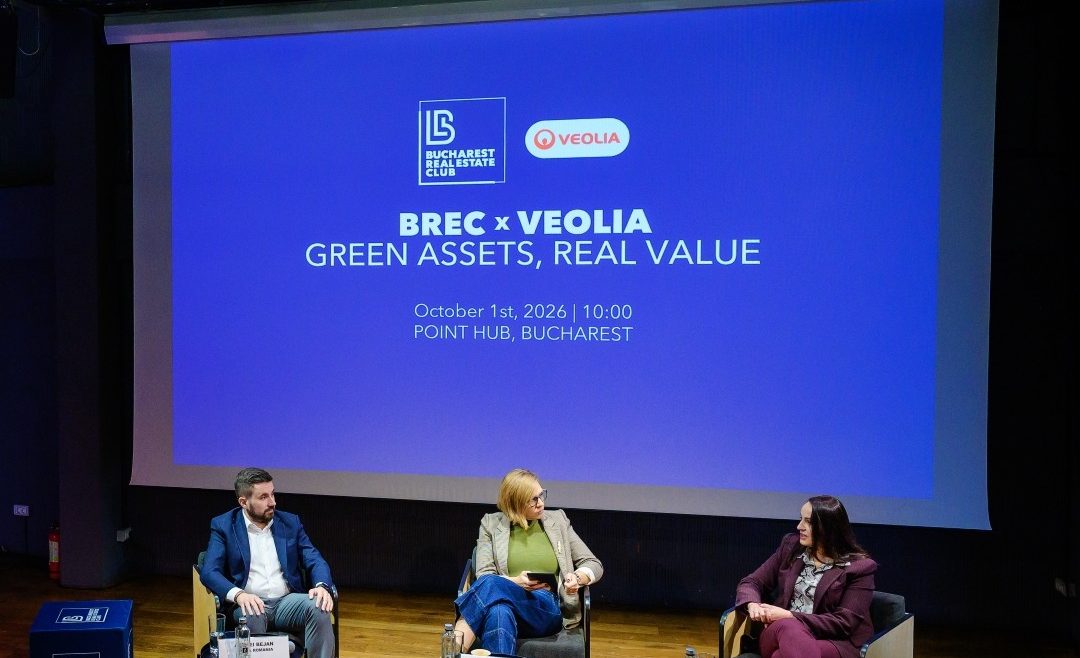
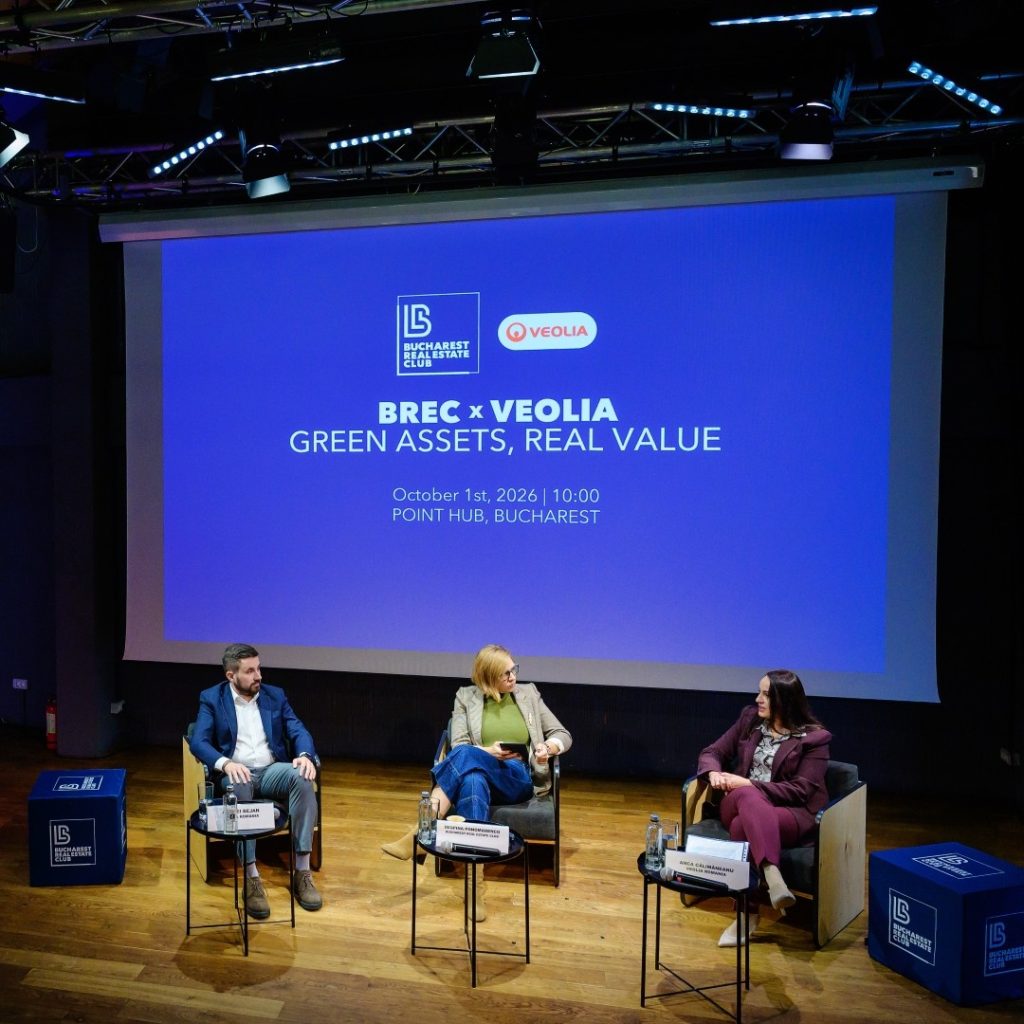
A conversation with Anca Călimăneanu (Senior Sales Manager) and Andrei Bejan (Deputy Business Development Director), Veolia România, following the first BREC × Veolia event

Veolia talks about “integrated” water and energy solutions. For a developer, what does “integrated” actually mean – and why should it matter?

Andrei Bejan: It means we stop treating water, heating, cooling and power as separate line items handled by separate suppliers and start designing them as one system from the earliest project phase. A developer who does this doesn’t just save on installation — they gain a single operational logic that stays efficient for the entire life of the building. When you plan the energy and water strategy together, the whole becomes far more than the sum of its parts: one solution’s waste can become another’s resource. That’s the essence of the circular thinking we bring to real estate.

This has been a year in which energy became the single biggest cost surprise for CEOs worldwide. What is the first thing a developer should rethink in a new project?

Anca Călimăneanu: Predictability. The instinct is to look at the upfront investment, but the real risk today sits in the next 20 or 30 years of operation, exposed to volatile energy prices. The most common mistake we see is postponing the energy decision until late in the design, when the cheapest and most effective options — like geothermal fields — are no longer feasible. Decoupling from price volatility is a decision you make on the drawing board, not after handover.

Let’s talk results. Which projects best show what these solutions deliver in practice?

Andrei Bejan: The One United Properties developments are a strong example. Across One Lake Club and One Lake District, we reach 80% of energy from renewable sources, cut costs by at least 30%, and reduce emissions by nearly 3,900 tonnes of CO₂ every year — largely by recovering heat from wastewater. At One High District, one of Romania’s most ambitious heat-pump projects, 310 geothermal probes drilled to 120 metres deliver over 6,600 MWh of renewable energy annually, under a single 30-year contract covering energy, water and facility management.

Anca Călimăneanu: And One Peninsula was a genuine first for Romania — the first residential project to use large-capacity ground-source heat pumps for simultaneous heating, cooling and hot water, cutting energy costs by up to 50% versus conventional gas-and-chiller systems.

GeoExchange is central to your offer. What makes it so adaptable across project types?

Anca Călimăneanu: GeoExchange uses the stable temperature of the ground to provide heating, cooling and domestic hot water at once. That flexibility is exactly why it fits so many contexts — residential, retail, logistics, or the mixed-use developments so common in Romania. In a mixed scheme, one building may need cooling while another needs heating, and the system simply moves that energy between them instead of wasting it. Crucially, it works not only for new builds but for existing buildings too — which matters for developers holding older assets.

Beyond geothermal, where else is there value most people overlook?

Andrei Bejan: Heat recovery is the quiet champion. Our Apa Nova Vitan building is the first project in Romania to recover energy directly from the sewage system, combined with photovoltaics — bringing costs up to 90% below classic district heating. On the power side, pairing photovoltaics with battery storage (BESS) is reshaping the economics: with negative energy prices in certain hours and shifting grid tariffs, storage lets you use your own clean energy when it’s most valuable rather than selling it back for nothing. We’ve already deployed over 400 MWp of solar and some of Romania’s largest battery systems, including a 14 MWh installation at Cetate, Dolj.

The closing question – five years from now, which of these solutions moves from “competitive differentiator” to “minimum requirement”?

Andrei Bejan: Most of them. Regulation, banks and tenants are converging on the same expectation. An energy-efficient asset already commands a premium and easier access to green financing; soon, the absence of these features will be a discount — or a deal-breaker. The developers who treat resource efficiency as core strategy today are simply building the assets that will still be financeable and leasable tomorrow.

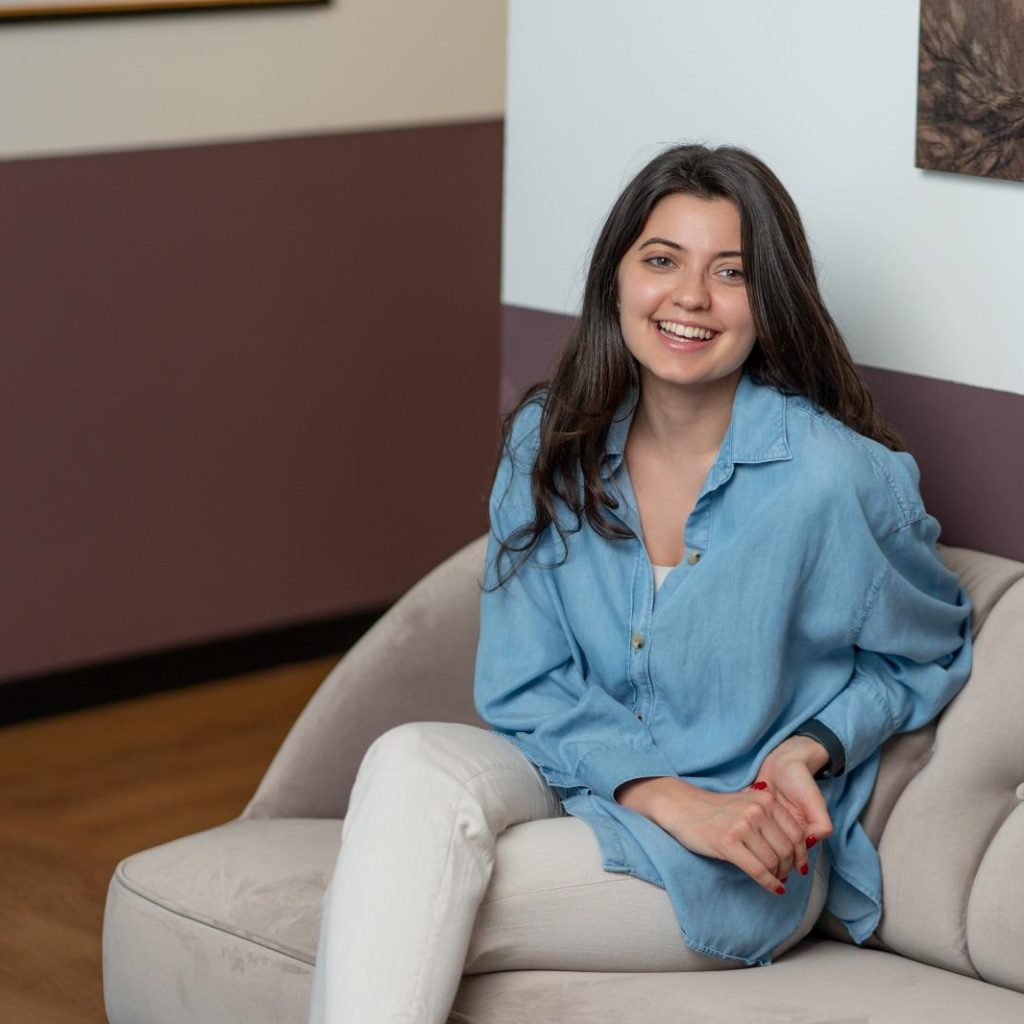
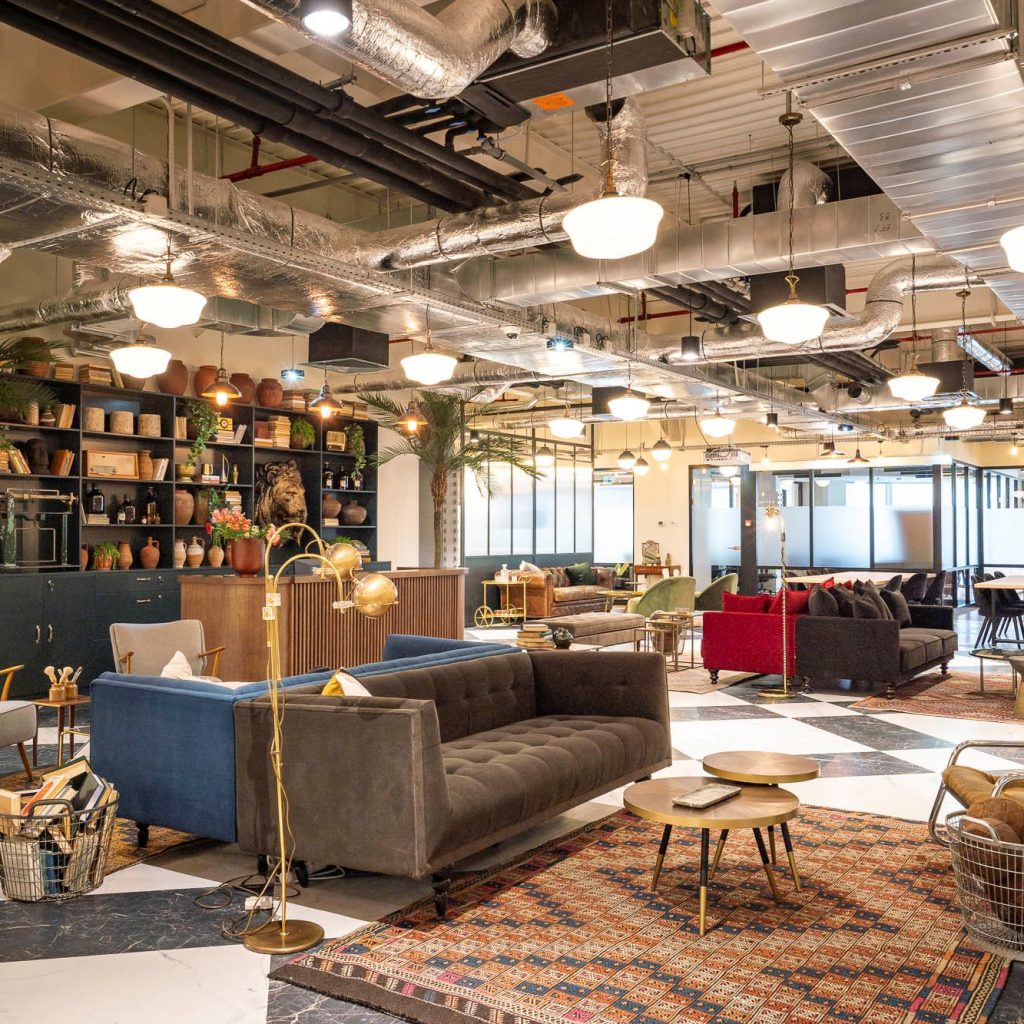
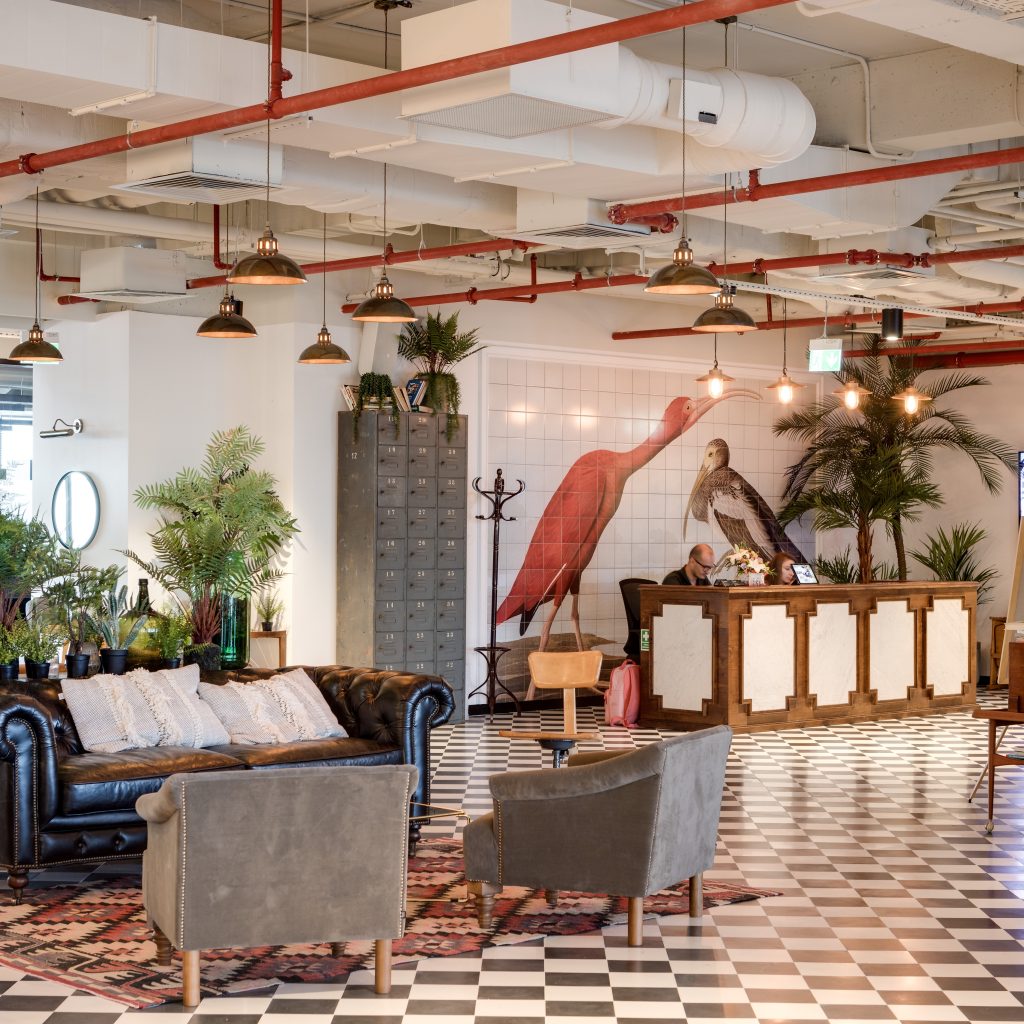
How Mindspace Is Shaping Romania’s Flexible Office Market

How Mindspace Is Shaping Romania’s Flexible Office Market 1200 600 BUCHAREST REAL ESTATE CLUB

18.05.2026

Andreea Birladeanu, General Manager Romania, Mindspace

Mindspace operates two hubs in different areas of the capital. How do the two locations differ, and what type of tenants have you attracted?

Mindspace’s two Bucharest locations reflect two different business dynamics within the city.

Mindspace Victoriei location, in the central Bucharest, attracts a diverse mix of international companies, professional services firms, tech teams and scale-ups seeking strong accessibility and a premium central presence. The atmosphere is energetic and business-oriented, with many companies using the space as a hub for hybrid teams and client-facing operations.

Mindspace Business District, located in one of Bucharest’s key modern office areas, appeals more strongly to established corporations, regional headquarters, and fast-growing technology companies. Tenants there tend to prioritize scalability, premium amenities, and access to modern infrastructure while still maintaining flexibility.

What’s particularly interesting in Romania is how diverse the tenant mix has become. Flexible workspaces are no longer used only by startups or freelancers. Enterprise companies, outsourcing firms, creative industries, and international businesses are increasingly using flexible office solutions as part of their long-term workplace strategy.

Can we still talk about co-working as a solution for freelancers and start-ups?

That’s where coworking started, but the Romanian market has evolved significantly.

In the early years, coworking spaces mainly served freelancers, entrepreneurs and small startups that needed affordable and flexible office solutions. Today, the market has matured. Flexible workspace has become an important solution for medium-sized businesses, international companies entering Romania and enterprise teams adapting to hybrid work.

In Bucharest especially, companies are increasingly focused on employee experience, talent retention, and flexibility. The office is no longer viewed simply as a fixed operational cost. It’s part of company culture and employer branding.

Romania’s growing tech ecosystem has also accelerated this shift. Many companies want spaces that support collaboration, creativity, and community rather than traditional static offices.

So coworking today is less about company size and more about agility and experience.

Economic and technological instability makes 10-year planning difficult for companies. Under these conditions, is flexibility becoming the “new security” for tenants?

Absolutely. In today’s environment, flexibility is increasingly seen as a form of security.

Many companies are cautious about committing to long-term leases because workforce needs, economic conditions, and technology are changing so rapidly. This is especially relevant in Romania, where businesses are balancing growth opportunities with global uncertainty.

Flexible workspaces allow companies to scale more efficiently, adapt to hybrid work models, and reduce long-term real estate risk. Instead of locking themselves into rigid structures, businesses want the ability to evolve and adapt quickly.

We’re also seeing that flexibility supports talent strategy. Employees now expect more adaptable work environments, and companies need workplace solutions that help attract and retain skilled professionals.

In many ways, agility has become more valuable than permanence.

How does Mindspace use data and artificial intelligence to optimize workspace utilization? Do you have any insights into how workplace design is changing to accommodate teams that collaborate intensively with AI tools?

Data and AI are becoming increasingly important in understanding how people use workspaces and how offices can operate more efficiently.

By analyzing occupancy trends, meeting room usage, attendance patterns and member behavior – Operators can optimize layouts, improve operational efficiency, and create more responsive environments.

AI also helps improve forecasting, energy management and personalized workplace experiences. As hybrid work becomes standard, these insights are essential for adapting spaces to real usage patterns rather than assumptions.

In terms of design, offices are evolving significantly because AI is changing how teams work. Routine individual tasks are increasingly supported by AI tools, which means the office is becoming more focused on collaboration, innovation, and interpersonal interaction.

We’re seeing demand for:

  • More collaboration zones and social spaces
  • Flexible meeting rooms with advanced hybrid capabilities
  • Quiet rooms for focused AI-assisted work
  • Better acoustics and adaptable layouts
  • Hospitality-inspired environments that encourage employees to spend meaningful time in the office

In Romania’s competitive talent market, workplace quality has become an important differentiator.

As co-working evolves into broader business ecosystems, how are operators responding in terms of the services they provide?

The role of coworking operators has expanded considerably.

Today, companies expect much more than office infrastructure. They’re looking for environments that support networking, employee wellbeing, productivity, and company culture.

Operators are responding by building full business ecosystems around the workspace experience. That includes hospitality services, curated events, wellness initiatives, networking opportunities, flexible memberships, and community-driven programming.

In Bucharest, this is particularly relevant because many businesses value opportunities for collaboration and international connectivity. Flexible workspaces can create communities where startups, scale-ups, corporates, and creatives interact organically.

We’re also seeing increased demand for:

  • Enterprise hybrid-work solutions
  • Event and meeting spaces
  • Plug-and-play offices
  • Wellness and lifestyle services
  • Community and networking programs
  • Technology-enabled workplace experiences

The overall direction is clear: coworking is evolving from a real estate product into an experience and service platform that helps companies support both business performance and employee satisfaction.