





Urban consumer behavior in Romania is measured with a dedicated index. Trends over the last three years.
| +17%
SPENDING PER VISIT 327 → 370 → 383 RON · real growth above inflation |
64%
REAL CONVERSION visitors who stated they made a purchase after seeing an ad in the mall · 3-year record |
82%
ADS RECALL growing for 3 consecutive years · 80% · 81% · 82% |
70
MALL EFFECT INDEX 2026 on a 0–100 scale · 65 · 67 · 70 (series 2024–2026) |
The Mall Effect Index (MEI) https://themalleffect.ro/ reached a score of 70 points on a scale of 0 to 100 in 2026, the third consecutive year of growth, from 65 in 2024 to 67 in 2025. Romanians in major cities reported spending an average of 383 RON per mall visit, 17% more than two years ago, a growth that exceeds the cumulative inflation rate over the same period. The indoor advertising conversion rate reached 64%, an all-time record in three years of measurement, and the conversion gap of +7 percentage points shows that more people actually make a purchase compared to those who say they intend to.
WHAT IS THE MALL EFFECT INDEX (MEI)
The Mall Effect Index (MEI) is the first initiative in Romania to longitudinally track consumer behavior in shopping centers. Developed by Generatik together with Reveal Marketing Research, this index aims to bring greater clarity to an area that has been insufficiently measured until now: real consumer behavior in shopping centers and the role the mall plays in the purchasing decision.
Built on three waves of research conducted between 2024 and 2026, the index provides the first coherent insights into how consumption works in Romania’s shopping malls. Until now, the market has had mostly fragmented data on traffic, sales, or reach, but very few integrated tools that track the same type of behavior, using the same methodology, year after year.
„The Romanian market has sales data, traffic data, and reach data. What it has lacked until now is a tool that measures the same behavior, with the same method, year after year. Without that, you cannot tell whether what you see is a real trend or just year-to-year variation”, explains Marius Luican, founder of Reveal Marketing Research, highlighting the role of methodological continuity in this endeavor.
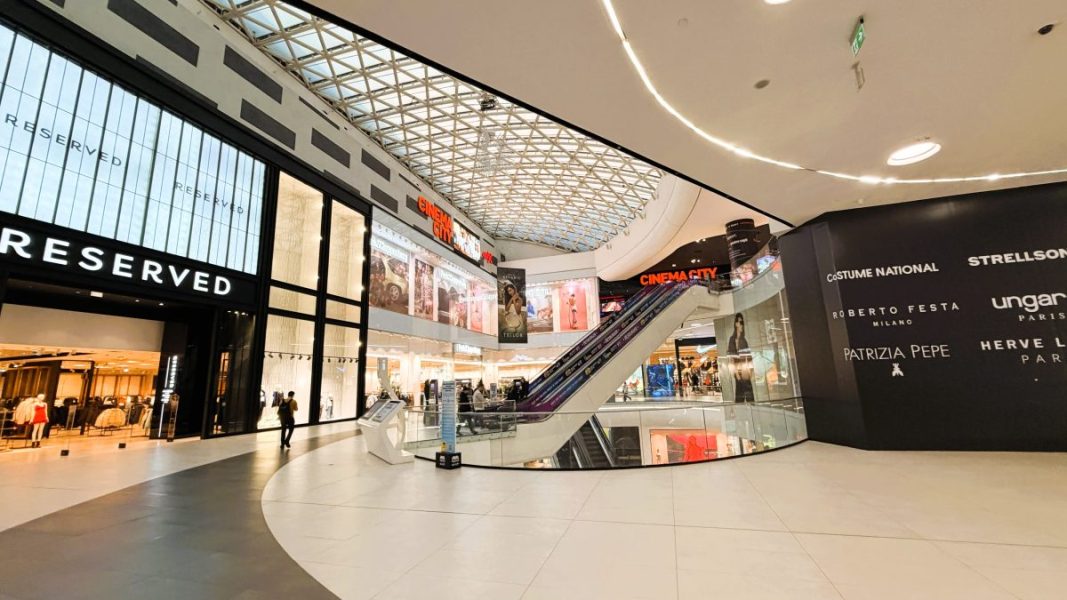
From an advertising effectiveness perspective, approximately 8 in 10 visitors reported having seen advertising in the mall during their visit , this is the exposure rate, the first sub-index of the index, measuring how many visitors have visual contact with indoor advertising. 64% of respondents said they made a purchase as a result of an ad seen inside, representing the conversion rate, the only sub-index that measures real behavior rather than stated intent. However, the index’s surprise indicator remains the difference between stated intent, what people say they will do after seeing an ad, and actual purchasing behavior: more respondents said they actually made a purchase (64%) than stated they intended to (57%). This 7-percentage-point gap, called the Conversion Gap, shows that the influence of mall advertising operates beyond consumer awareness, and that the mall functions more as a decision-making and purchasing space rather than merely an exposure space. At the same time, indoor advertising recall, the extent to which visitors exposed to advertising retain something from what they saw, has grown for the third consecutive year, a rare phenomenon in Romania’s media landscape.
The influence of indoor advertising appears at a specific moment of the visit, defined by the authors as the “Golden Moment”, the point at which context, exposure, and consumption readiness align.
„The conversion gap is the golden nugget that mall advertising adds to the relationship between brand and consumer. When we go to the mall, we are much more open to discovery and purchase decisions than in other contexts. For the first time, this effect is beginning to be quantifiable”, explains Răzvan Marincoi, Product Manager at Generatik, Creator of The Mall Effect Index.
The 2026 study data paints a picture of a more active urban consumer who is spending more than in previous years. The average spending per visit reached 383 RON, exceeding the cumulative inflation rate over the analyzed period. The data suggests that the physical mall remains the primary point of contact and validation in the purchasing process, decisively influencing the final choice, even when the transaction subsequently shifts online.
The data also points to a shift in urban consumer behavior: the mall remains a relevant commercial space but is increasingly gaining a social dimension. At the same time, consumers appear to be becoming more efficient, spending more during shorter visits.
„After three consecutive years of measurement, the real conversion of mall advertising reached 64% in 2026, the highest since we started measuring. At the same time, average spending has increased, and advertising recall grows every year. We are no longer talking about a snapshot. We are talking about a structural trend that positions the mall as one of the most effective communication channels in Romania”, said Răzvan Marincoi, Product Manager at Generatik, Creator of The Mall Effect Index.
The project’s authors emphasize that The Mall Effect Index is an evolving endeavor, built on three years of comparable measurements. Derived from a larger study on consumer behavior and based on self-reported responses collected via the CAWI method, the index currently provides an overview of consumption trends in the mall.
The Mall Effect Index marks a shift in perspective in how the industry can understand consumer behavior in the mall: from measuring volumes to the mechanisms behind the purchasing decision. Based on three years of comparable data, the index is already outlining a first frame of reference , for brands and marketers, for media agencies, for investors and shopping center operators, and is preparing to reach a greater level of granularity. In editions 4 and 5, the analysis will be developed through dedicated studies and expanded with differentiations by mall type, city, and consumption category, built together with all interested parties.