


BREC Talks

BREC Talks

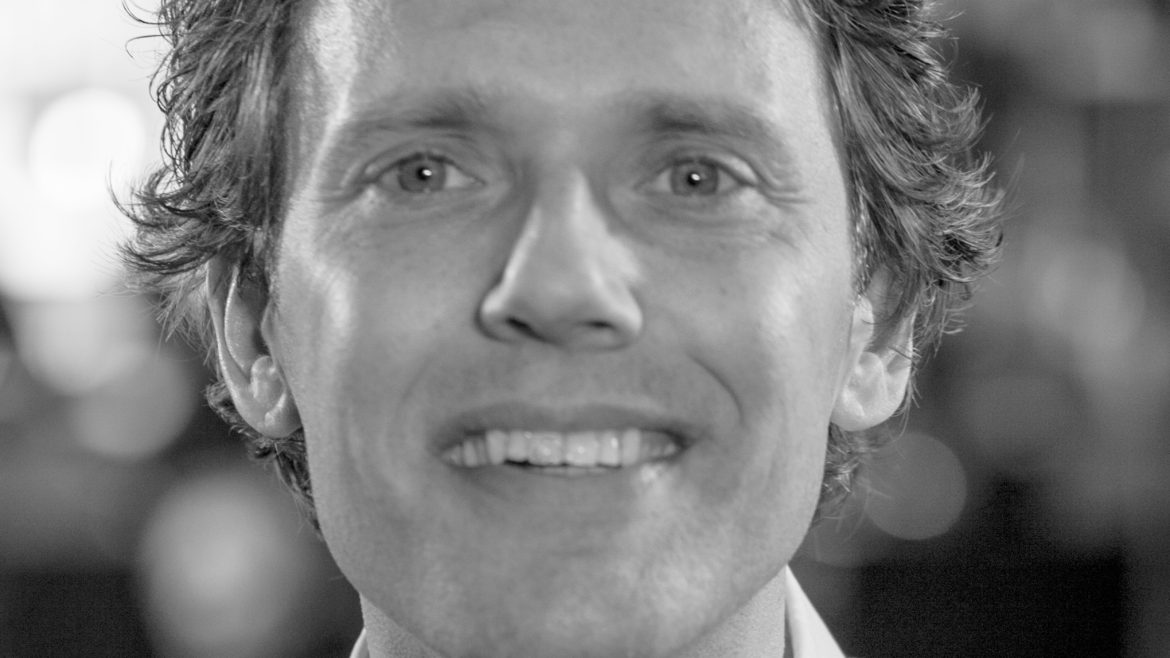
Ben Adams, Founding Director, Ben Adams Architects

Ben Adams, Founding Director, Ben Adams Architects 3540 5034 BUCHAREST REAL ESTATE CLUB

BREC Talks to Ben Adams

Founding Director, Ben Adams Architects

``Office buildings need to be interesting, creative, non-standard and exciting to be in. Bucharest is still building largely boring buildings and needs to wake up to the demand for better buildings that let at higher rents..``

Established in 2010, Ben Adams Architects has quickly developed a reputation for elegant, contextual architecture balancing function with an appropriate degree of innovation and flair.  With offices in London and Los Angeles, the architectural studio has in its portfolio clients such as Nobu Hotel, Derwent London, The Science Museum, Great Portland Estates etc. The company’s founder, Ben Adams, has recently visited Bucharest for un upcoming project and shared with BREC his opinions on the development of the city.

Bucharest is now experiencing a “natural gentrification” phenomenon. How do you see the potential of historic, industrial buildings in Bucharest? What successful examples did you develop/ see?

Bucharest is a beautiful city, with a long history and a unique position in Europe between the ‘old’ countries of Western Europe and the new frontier to the East. Bucharest should position itself as a vibrant mix of old and new, with so many opportunities for those looking to make a difference. Be brave.

The historic buildings and industrial heritage of Bucharest are one of its most powerful assets.

We have seen Brooklyn explode with developments in old Industrial neighborhoods, and Shoreditch in east central London is now one of the most desirable parts of the city in which to live and work. Making something new by reinventing your heritage has driven development in London, New York, Chicago, Berlin and many other successful cities in the last twenty years. Bucharest needs to embrace this process and recognize how powerful it is as an engine of change. We are working on a huge re-use project in Grivita that is a great example of this phenomenon.

You have recently visited Bucharest – what type of projects do you think Bucharest can accommodate now? What idea would you give a developer to build together with you in Bucharest?

I think the market in Bucharest is maturing as new office buildings, shopping malls and residential projects appear in different parts of the city. What I haven’t seen is the kind of characterful mixed-use buildings that are common in cities like London and Los Angeles. They can be large or small, and the mix of uses is what makes local neighborhoods desirable, interesting and also valuable.

What should Bucharest do to attract international investors (let`s say, your clients from London)?

I think Bucharest needs to shout about its growth and the returns that are on offer from what is a low commercial basis. It means you can acquire land at low cost and build projects in phases according to demand. I know that a lot of office space in Bucharest is pre-let before the buildings are begun, or complete, and this suggests that there is a big opportunity for investors in speculative buildings that stand out from the crowd.

What`s your proposal for economically efficient office buildings? How would you help a developer maximize his investment through architecture?

Office buildings need to be interesting, creative, non-standard and exciting to be in. For many years the office market was boring and repetitive and then everything changed about ten years ago in London, New York and Los Angeles. Bucharest is still building largely boring buildings and needs to wake up to the demand for better buildings that let at higher rents. There is some evidence of this happening near the Government in Piata Victoriei but it is an exception for the moment.
Ben Adams, Founding Director, Ben Adams Architects

Ben Adams, Founding Director, Ben Adams Architects 3540 5034 BUCHAREST REAL ESTATE CLUB

BREC Talks to Ben Adams

Founding Director, Ben Adams Architects

``Office buildings need to be interesting, creative, non-standard and exciting to be in. Bucharest is still building largely boring buildings and needs to wake up to the demand for better buildings that let at higher rents..``

Established in 2010, Ben Adams Architects has quickly developed a reputation for elegant, contextual architecture balancing function with an appropriate degree of innovation and flair.  With offices in London and Los Angeles, the architectural studio has in its portfolio clients such as Nobu Hotel, Derwent London, The Science Museum, Great Portland Estates etc. The company’s founder, Ben Adams, has recently visited Bucharest for un upcoming project and shared with BREC his opinions on the development of the city.

Bucharest is now experiencing a “natural gentrification” phenomenon. How do you see the potential of historic, industrial buildings in Bucharest? What successful examples did you develop/ see?

Bucharest is a beautiful city, with a long history and a unique position in Europe between the ‘old’ countries of Western Europe and the new frontier to the East. Bucharest should position itself as a vibrant mix of old and new, with so many opportunities for those looking to make a difference. Be brave.

The historic buildings and industrial heritage of Bucharest are one of its most powerful assets.

We have seen Brooklyn explode with developments in old Industrial neighborhoods, and Shoreditch in east central London is now one of the most desirable parts of the city in which to live and work. Making something new by reinventing your heritage has driven development in London, New York, Chicago, Berlin and many other successful cities in the last twenty years. Bucharest needs to embrace this process and recognize how powerful it is as an engine of change. We are working on a huge re-use project in Grivita that is a great example of this phenomenon.

You have recently visited Bucharest – what type of projects do you think Bucharest can accommodate now? What idea would you give a developer to build together with you in Bucharest?

I think the market in Bucharest is maturing as new office buildings, shopping malls and residential projects appear in different parts of the city. What I haven’t seen is the kind of characterful mixed-use buildings that are common in cities like London and Los Angeles. They can be large or small, and the mix of uses is what makes local neighborhoods desirable, interesting and also valuable.

What should Bucharest do to attract international investors (let`s say, your clients from London)?

I think Bucharest needs to shout about its growth and the returns that are on offer from what is a low commercial basis. It means you can acquire land at low cost and build projects in phases according to demand. I know that a lot of office space in Bucharest is pre-let before the buildings are begun, or complete, and this suggests that there is a big opportunity for investors in speculative buildings that stand out from the crowd.

What`s your proposal for economically efficient office buildings? How would you help a developer maximize his investment through architecture?

Office buildings need to be interesting, creative, non-standard and exciting to be in. For many years the office market was boring and repetitive and then everything changed about ten years ago in London, New York and Los Angeles. Bucharest is still building largely boring buildings and needs to wake up to the demand for better buildings that let at higher rents. There is some evidence of this happening near the Government in Piata Victoriei but it is an exception for the moment.

(31.07.2018)

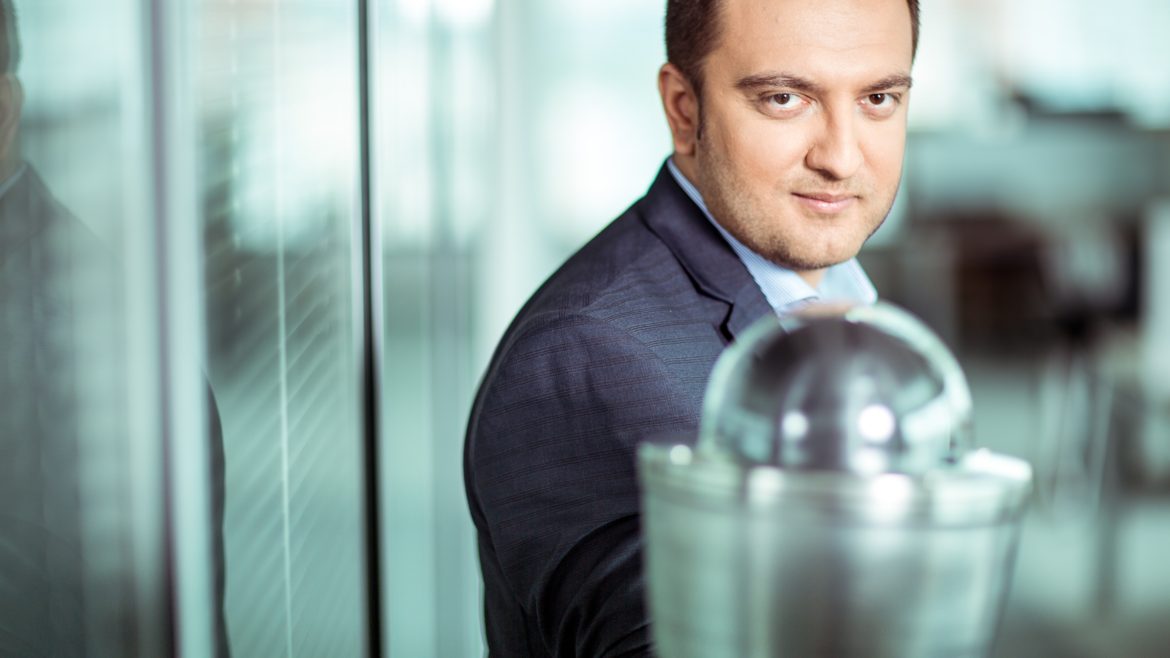
Adrian Untaru – Co-founder, ADNBA

Adrian Untaru – Co-founder, ADNBA 1103 666 BUCHAREST REAL ESTATE CLUB

BREC Talks to Adrian Untaru

Co-Founder, ADNBA

``We have many small developers that don’t allow the risk to get out of a pattern and, in this way, we have an excess of similar products. The demand for new homes is high, whatever there is on the market is being sold and we produce what has been sold.``

With an experience of 15 years, ADNBA has established a reputation as a creative designer for residential compounds, being responsible for projects such as Urban Spaces, Occidentului 40, Forte Partners’ Aviatiei Park or Avalon Estate of Prime Kapital. As residential sector is rapidly developing we took the opportunity to question the co-founder of the architectural company, Adrian Untaru about the challenges of this new evolution.

How do you evaluate the evolution of the residential market in the last couple of years, as regards the requests of developers towards the designers?

We think there are too few examples of projects developed on long term, projects with mixed functions, much more suitable to a coherent development of the city. We don’t have a strategy for the city’s development. We have many small developers that don’t allow the risk to get out of a pattern and, in this way, we have an excess of similar products, wit no possibility of being differentiated. The demand for new homes is high, whatever there is on the market is being sold and we produce what has been sold.

Do the developers pay more attention to the design stage?

Yes. There is indeed a bigger involvement of developers in the design stage. Their experiences have probably shown that a project not thoroughly designed has small chances to go well. Also, the increasing competition on the market is probably the single benefit of this intense residential demand.

Do you receive requests for developing communities and not necessarily residential condos, as they have been perceived up to now?

We do receive those type of requests, but there are more likely exceptions. We have recently been involved in the development of such a project. A design process which took 18 months for an 8-hectare plot. There we had the opportunity to create a community as we envision, with a housing mix specific to a community, where we have individual and in line houses and apartments in low rise buildings, all of those along a service area, a club, a kindergarten, and a park accessible to all residents. We would like to see more approaches of this type and we refer here to a long-term development strategy.

How do you think the new quality residential developments in Bucharest will look like in five years from now? What architectural trends we will see? And what types of facilities there will be offered?

We believe, or better said we hope for a quality increase of the new residential developments. And we do not refer here to a more expensive finishing, which doesn’t necessarily lead to a different way of living. We hope for an education of consumption towards the quality of the living space, towards a building in which we enjoy staying as well as we enjoy looking at it. Homes are, for most of us, the most important investment during lifetime. The way these homes pass the time test directly influences the investment. This can go up or down, according to the overall quality of the entire project. And in the last couple of years we have noticed many examples in both cases, enough to help this economic education we need so badly.
On the other hand, is possible that the new generations to be more mobile and to prefer to rent, instead of buying. In this situation it would be much easier to change a home in a less qualitative project. This process could lead to new opportunities on the market: specialized entities which own and professionally administrate residential assets; a qualified client able to evaluate the sustainability of a new development.

In conclusion: integrated developments, probably of big dimensions, with common facilities which will bring a plus in quality living, responsible developed.

(3.07.2018)

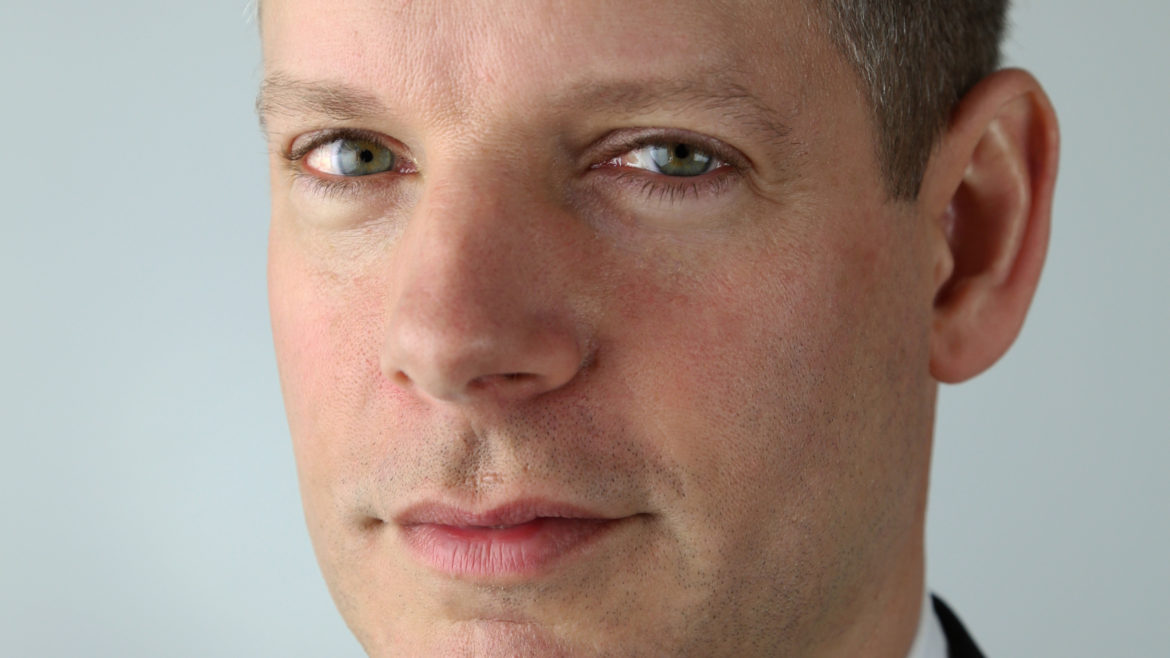
Laurențiu Lazăr – Managing Partner & Director Investment Services, Colliers International Romania

Laurențiu Lazăr – Managing Partner & Director Investment Services, Colliers International Romania 1720 1704 BUCHAREST REAL ESTATE CLUB

BREC Talks to Laurențiu Lazăr

Managing Partner & Director Investment Services, Colliers Romania

``Romania has been historically a market searched by speculative investors, but we can notice this trend changing. We can see a stronger interest from institutional investors, which look for large buildings and excellent tenants.``

The local branch of worldwide real estate services company Colliers has a history of more than 20 years on the Romanian market, offering a complete range of real estate advisory services. We took the opportunity to conversate with company’s leader about the investment market and new players on this segment.

How do you evaluate the quality of the real estate products developed in the last years? What advices would you give to developers in search for investors?

The quality of the traded real estate products has significantly improved in the last couple of years. The products that are already sold are at the same quality with those in CEE and Western regions. Also, the quality of tenants has constantly improved. We see new, large companies entering Romania, while local ones are developing at fast pace.

All of these factors translate into a strong demand for offices, retail and industrial spaces. The quality of the building and of the tenants are obvious criteria for attracting new investors. Nevertheless, developers don’t have reasons for unrealistic price expectations, as investments yields for office buildings in Bucharest are at the level of regional cities in Poland. And this gap will be reduced gradually, and not suddenly.

What are the main factors influencing the local investment market in 2018?

Investors’ appetite for real estate assets is obviously increasing as compared to last year, with the office sector taking the lead. In the first semester there have been two major deals and we believe other large transactions will follow.
The appeal of the Romanian real estate sector is given by the local vs regional yields differentiator as well as the effervescence of the local business environment, a fact acknowledged by the impressive economic increase (6.9% in 2017, the biggest in European Union).

What is the profile of the foreign investor that will enter the Romanian market and SEE region? Local/regional platforms or more likely from areas such as USA/Asia?

Romania has been historically a market searched by speculative investors, but we can notice this trend changing. We can see a stronger interest from institutional investors, which look for large buildings and excellent tenants. Of course, an effect of the market’s development is attracting top investors from regions which have not been yet extremely active on the local market (including North America and Asia).

Do we have products on the market at the standards of large, institutional investors? What must be done to attract new investment platforms in Romania?

In 2017 we had a reduced number of products at the standards of institutional investors, but beginning with 2018 we have a much larger offer. The most common opinions from them are referring to the predictability of Romania’s economic policies. I believe we need more stability in this regard to attract more institutional investors. In other words, the eternal story of structural reforms still remains on the agenda. The most important ones would be the improvement of the educational system and the development of the terrestrial infrastructure (especially roads and railways), which would significantly progress the perspective of the local economy on a longer term and, implicit, would also create new opportunities for the real estate segment.

(28.06.2018)

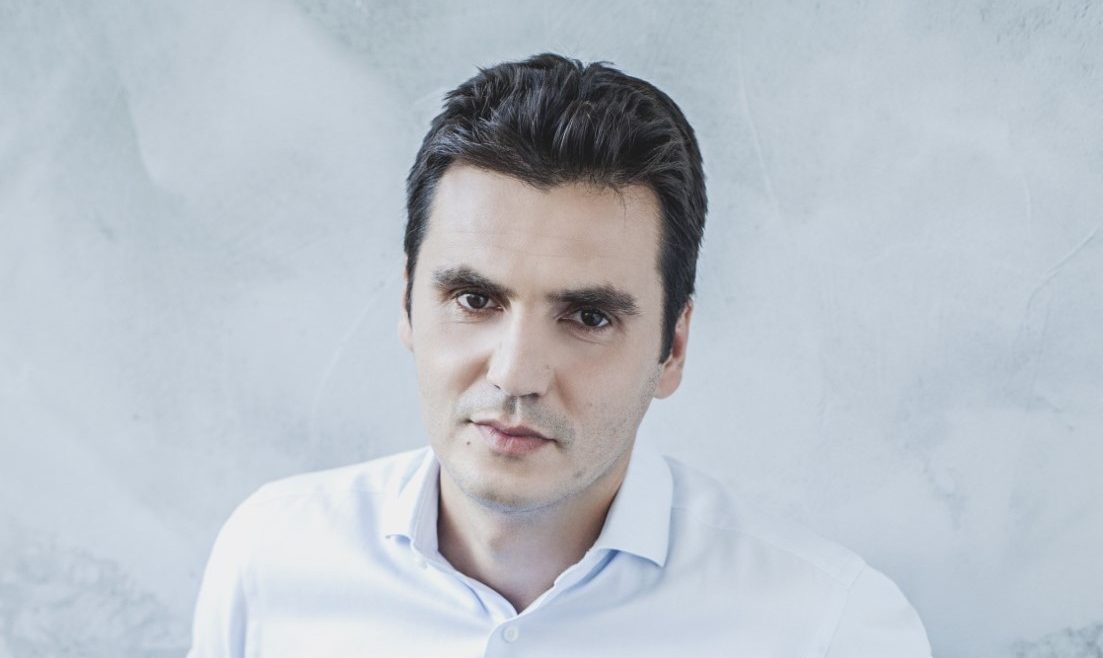
Roxana Dudau, Associated Partner, Noerr

Roxana Dudau, Associated Partner, Noerr 800 642 BUCHAREST REAL ESTATE CLUB

BREC Talks to Roxana Dudau

Associated Partner, Noerr

“There is an increased interest in high quality mixed use projects -mostly involving urban regeneration or reconversion of former industrial platforms- as well as for smart city technologies not only in Bucharest but also in regional cities.“

Roxana Dudau, Associated Partner heads Noerr’s Real Estate & Construction Department in Romania. She is a well-known & reputable real estate expert on the Romanian market. BREC talked with Roxana about the main factors influencing the local real estate investment market, the quality of the products and the pottential of each sector.

Which are the main factors influencing the local real estate investment market?

Apart from the global factors, i.e. global economic fragility, political uncertainty and the global financial environment, the refugees’ crisis, looming trade wars etc. which are com-mon for the entire region, the main local factors influencing the investment market in Romania remain the fiscal and legal unpredictability (amendments in these fields being constantly passed by the authorities), cumulated with a labor-force shortage that pre-vents companies from further growth. Fiscal uncertainty, namely incessant fiscal amendments triggered by the Government’s in-tention to fill the holes in the budget, has a direct negative impact on investors (also in the real estate field) and remains one of the main factor influencing local investment this year as well.

Other fiscal provisions affecting the investment market are the increase of mini-mum wage and the transfer of the social contributions from the employer to the employ-ees.
The relevant legislation for the real estate market seems to be targeted by the authorities, as well, as some law drafts aiming at structural amendment of the construction law and its methodological norms, as well as the preliminary theses of a unified construction and town planning code were recently in public debate.

How do you find the quality of the real estate products developed in the last couple of years? What piece of advice would you give to developers looking to attract investors?

It is clear that the quality of the real estate products developed during the last years in-creased tremendously. All new projects envisage to obtain a green certification, and this is pursued starting with the inception phase. This applies not only for office buildings, but late-ly also for retail and residential products. There is an increased interest in high quality mixed use projects (mostly involving urban regeneration or reconversion of former industrial platforms) as well as for smart city technologies not only in Bucharest but also in regional cities.
The most important piece of advice for investors (especially for larger investments involving urban regeneration) is to conduct a local survey with the aim to involve the local community in the process of creating the concept of the new investment or adapting it to local needs and also to establish a direct communication with the local decision makers/authorities to identify the best means to include the new investment within the larger urban plan of the lo-cality. Big projects often require a strategic approach of extending the existing infrastructure or creating a new one to sustain the new needs resulting from such investments.

What type of products are most sought after by investors in 2018?

I think the office sector shall further expand in 2018. The retail segment will expand as well, but mostly in the regional cities and in smaller schemes, as in Bucharest no new large pro-jects have been announced (except for some extensions). The star of the year 2018 seems to be the residential sector, which will likely record the fastest growth.

Marc Jongerius, Managing Director & Co-founder Zoku

Marc Jongerius, Managing Director & Co-founder Zoku 2490 3598 BUCHAREST REAL ESTATE CLUB

BREC Talks to Marc Jongerius

Managing Director & Co-founder Zoku

“Zoku is an entirely new product category: a home-office hybrid, suitable for long stays, with the services of a hotel and the social buzz of a thriving neighborhood.“

As new generations enter workforce market and start spending money, new, innovative real estate products are developed targeting them. Zoku Amsterdam was opened in 2016 and is a “combination between Airbnb and WeWork”, as Business Insider pointed out. The company is now developing in Europe, so BREC talked in an exclusive interview with Marc Jongerius, Managing Director & Co-founder Zoku about targeted cities and the expansion model.

What is the secret behind the success of Zoku?

The secret to our success lies in our ability to really understand the needs, wants and frustrations of our target audience. In developing Zoku, we did extensive research and found out that current offerings were often perceived as too traditional and not flexible enough for global nomads.
Where traditional hoteliers start with a floor plan, we see this as our end station. Instead, we started with a blank canvas to define how we can create more value for our guests compared to industry alternatives. We defined and tested all functional experiences that people would like to have to make their stay convenient, efficient and comfortable. After this we defined how we can increase the experience even further by offering tailor-made services, creating a social concept where people feel relaxed and well immediately, and designing a seamless integration of the on- and offline guest experience to really enrich people’s lives while living and working abroad.

Previously, none of this had been developed for the long stay segment.
Before going to the drawing board, we coined factors and ideas that would result in an attractive price point as well (leaving the frills out and creating space in less square feet). Most importantly, Zoku was a real crowd-sourcing project, where the entire concept was developed in close co-operation with our target audience, who extensively challenged us and tested all four prototypes and concept designs.
Designed in collaboration with Concrete, the award-winning interior design and architecture agency, Zoku is an entirely new product category: a home-office hybrid, suitable for long stays, with the services of a hotel and the social buzz of a thriving neighborhood. It’s a relaxed place to live, work and socialize with like-minded people while getting wired into the city.

What are your targeted cities for expansion? How do you see the potential for SEE Europe in general and Bucharest/Romania in particular?

Zoku aims to create an international community network of Zokus through an international rollout in cities that are innovative, tolerant and have a large international network.
In the next years, it is our ambition to open at least five new locations with around 750 units, focusing on European cities such as London, Berlin, Paris, Hamburg, Barcelona, Vienna Zurich or Copenhagen.
Zoku is always looking for interesting opportunities in areas that will be rapidly developing in the upcoming years. When we find an opportunity in a city that matches our pre-defined criteria, we will definitely always look into it.

What is the expansion model? Do you take financing for expanding the network or do you consider to franchise?

Zoku will keep the operation of its hotels within the company and can be realized in existing buildings as well as on new-built locations.

Răzvan Crișan – Co-founder of m60

Răzvan Crișan – Co-founder of m60 1417 1417 BUCHAREST REAL ESTATE CLUB

BREC Talks to Răzvan Crișan

Co-founder of m60

“There is potential for specialty coffee shops in niched shopping malls.“

A smart coffee shop concept is an “anchor” for a successful office building: a benefit for tenants and a landmark for the building, attracting new clientele in the place. With new office hubs and retail formats developing, we sat down with Răzvan Crișan, Co-founder of m60 and talked about the specialty coffee market development and opportunities.

The market has expanded significantly in the last two years especially in the downtown area. Do you see potential for such coffee shops in a mall, as an alternative for the offer of the big chains- Starbucks, Gloria Jeans etc?

The coffee shop market is to be divided in two major categories: the specialty ones, independently operated, and the big chains. In shopping malls, for the moment, it is all about convenience: fast, big and accessible, while specialty coffee shops are more about experience, quality and niched products.

It’s hard to imagine a specialty coffee shop in a mall, while they focus on fast, big and accessible. Outside Romania there are niched shopping malls and maybe when those type of real estate developments will appear on the local market, we will also see there some concepts focused on experience and quality.

What are your estimations regarding the annual value of the specialty coffee shops’ market?

Theoretically, there are around 40 places in Bucharest, called as ‘specialty coffee shops’, but I believe that only 10-15 are preoccupied to do a truly good job. And when I say a good job, I am referring to investments in equipment, working with good beans and most of all the investment in the staff to offer a nice experience for the clients. At M60 we decided to serve along specialty coffee, simple but delicious food. If you do your job honestly, with a coffee shop like m60 you can reach an annual turnover of over 2 million RON, like us, in the third year.

What were the key elements in the success of m60? How many daily customers does the coffee shop have?

We started in 2015 and we have succeeded to double our business. Regarding the clients’ daily average, we have increased significantly, at a level of 250-300 persons. We have three criteria which we try to implement every time we invest in a new location: we focus on quality design, with an original approach, that suits the location, we offer very good quality products, trying as much as we can to buy from local producers and we invest in creating a motivated and involved team. Interestingly, when we chose the location from Mendeleev street we were discouraged by real estate experts on the market, arguing the area was inappropriate. The lesson here was that sometimes you don’t listen to the expert’s opinion and trust your entrepreneurial instinct, especially when you are a start-up.

Marian Popa – Director of DB Global Technology in Bucharest

Marian Popa – Director of DB Global Technology in Bucharest 560 480 BUCHAREST REAL ESTATE CLUB

BREC Talks to Marian Popa

Director of DB Global Technology in Bucharest

``Romanian Real Estate market starts to enter a pre-maturity phase and I sense the need of its transformation in a supplier for habitat services. I am referring here to complete relocation services: from temporary apartments offers, shared-car services, catering, conferences facilities, etc. The transformation of this industry from a < hard > predilect area to a < soft > one will determine a qualitative increase of used spaces, in the benefit of both parties.``

The technology center of Deutsche Bank is operational since 2014 in BOB office building from UpGround and employs 500 IT & C specialists . The center develops top software solutions for the banks’ global operations and represents a platform for highly skilled engineers. BUCHAREST REAL ESTATE CLUB exchanged views with Marian Popa, Director of DB Global Technology in Bucharest about the future of workspace and expectations related to the services on the local real estate market.

What is the impact of Real Estate in the attraction, retention and motivation of your employees?

The impact of a modern workspace can be interpreted in two ways: the first one, which is usually described as <<Wow!>> or <<Cool>!> and the long term impact which involves several elements such as: the ease of the workflow, the flexibility of the workspaces’ facilities, the logic of the furniture in the production flow or chromatics as an long term effect, just to name a few.

This is why we don’t just implement a fit-out process, we build it on long term periods of up to a year, during which we involve our colleagues, the future users of the space. We choose this solution because we do not consider the real estate component as just a roof under which we activate, but as an essential element of the collaboration between DB Global Technology has with its employees.

How do you use the office premises as a differentiating factor on a very competitive workforce market?

A competitive workforce market generates quality, and this has positive effects as competition is the most severe arbitrator. We try to perceive our workspace as a partner – I think this is the principal differentiating factor. A partner which helps you to perform, which generates good mood and stimulates the creativity of the occupants. And, as it mainly is a problem of human interaction, the project manager was the HR Department. The achieved results prove that it has been a successful project, which we are about to multiplicate.

How do you see the future of work-space?

The workspace of the future is directly related to the development of technology. The more freedom technology offers us, the more virtual the workspace will become. The “working anywhere” concept will evolve and will be the future trend, while holograms, future networks of 6-7-10G, augmented multi-tasking will allow us in the future to consider the office anywhere.

What are your expectations when discussing with representatives of the local real estate market? What type of services would you expect to be delivered?

Romanian real estate market starts to enter a pre-maturity phase and I sense the need of its transformation in a supplier for habitat services. I am referring here to complete relocation services: from temporary apartments offers, shared-car services (the road from home to office is constantly done for 22 days per month), catering, conferences facilities, etc. The transformation of this industry from a predilect “hard” area to a “soft” area will determine a qualitative increase of used spaces, in the benefit of both parties.

H.E. Basil Constantinescu – Romanian Ambassador to the People`s Republic of China

H.E. Basil Constantinescu – Romanian Ambassador to the People`s Republic of China 2000 1333 BUCHAREST REAL ESTATE CLUB

BREC Talks to H.E. Basil Constantinescu

Romanian Ambassador to the People`s Republic of China

“Chinese companies will become more and more interested in the investment opportunities in Romania, in the context of dynamic promotion of the New Silk Road Initiative”

One of the proposed routes in the initiative is China – Port Batumi-Port Constanta. If the railway road will include Romania, the new created infrastructure will have a massive impact on the local logistics sector, with the potential of attracting new, important players on the market.

Private Real Estate in ECE region targeted by China`s New Silk Road Initiative

On the occasion of the 16+1 Summit (China-Central and Estearn European Countries) in Riga, November 2016, the China – Central and Eastearn European investment Fund was launched – a private equity fund meant to support investment projects implemented through the 16+1 Cooperation Format.

Industrial and Commercial Bank of China (ICBC) Financial Group was designated by the Chinese Government to launch consultations with potential partners, for the establishment and operationalisation of the fund. Thus, under the coordination of Sino-Central Eastern Europe Financial Holding Corporation (CEEFC), member of ICBC, consultations, strategic lines and ways of operation of the Fund have been established. CEFC, together wth ECE partners and other Anchor Investors will contribute to the initial capital with EUR 1 bln., as Limited Partners. Other premium institutional investors are expected to contribute with EUR 9 bln., following a fund raising campaign.

Chinese funds of EUR 10 Bln. for projects in Central & East Europe, through the Initiative

The Fund will mainly finance projects in the ECE region, as well as projects developed under the new Silk Roads Initiative in other regions. Under market conditions, without irredeemable component, public projects will be financed (such as transportation infrastructure, energy, utilities and other public projects). A special attention will be provided to private sector projects able to generate important growth in the following period – companies activating in healthcare sector, agriculture, IT&C, High-Tech, Real Estate, states the Romanian Ambassador to the People`s Republic of China.

The Initiative is considered the biggest foreign spending program by any one country since the U.S.’ Marshall Plan to rebuild post-World War II Europe. BUCHAREST REAL ESTATE CLUB`s key question in the context: How will Romania and ECE private Real Estate sector will benefit from?

Back to top

Bogdan Gavril – Sales Engineer & Trainer, CEE Region at Axis Communications

Bogdan Gavril – Sales Engineer & Trainer, CEE Region at Axis Communications 2880 1920 BUCHAREST REAL ESTATE CLUB

BREC Talks to Bogdan Gavril

Sales Engineer & Trainer, CEE Region at Axis Communications

“Retail surveillance can provide information to support the development of better store layouts – via heat mapping and dwell time applications”

Following the opening of a new office in Romania by Axis Communication, the market leader in network video, we sat down for an interview with Bogdan Gavril, Sales Engineer & Trainer, CEE Region at Axis Communications to find out more about the company’s innovative solutions for retailers and smart city.

How do you address the retail segment and what type of info can those type of solutions offers to the retailers or retail owners?

Retailing today is a tough business and more and more store owners face challenges. Therefore, it is important to ensure that your store technology can minimize loss due to frauds and protect people and assets. As important, find opportunities to increase revenues and enhance customer experiences in real time. Retail surveillance using network video solutions such as IP cameras is an excellent weapon in the battle to protect the retail business and to find ways to increase its efficiency, like it can help store owners manage queues, count people and monitor flow control. Or It can provide information to support the development of better store layouts – via heat mapping and dwell time applications.

Outside the store itself, network video can be connected to access control systems, or used for general surveillance of the building’s exterior and parking lot. License plate recognition is also possible, thanks to the high quality of the images generated. All of these cross functional applications make retail stores safer for visitors and more profitable for the owners. More, network cameras in intelligent systems can spot even empty shelves – and alert appropriate staff to get them restocked. In this way the manager can monitor queues and re-deploy staff where they are most needed.

How can your video surveillance solutions can help to improve traffic in Bucharest?

We believe that the road to a smarter traffic is by monitoring it. From congestion and stopped vehicles to serious accidents and extreme weather, we understand the everyday traffic management challenges and to keep the traffic moving as smooth as possible, we need the very latest information at hand.

Axis Communications is working with partners across the globe to offer smart network video solutions, that can provide reliable and detailed traffic video around the clock, automatically alert for incidents such as congestion and stopped vehicles. Our products stand up to the toughest weather conditions and provide real-time and historic traffic data. One of our recent local integration was done in Bucharest, Pasajul Unirea. The solution was developed by Axis Communications and one of our partners and consists of three pillars:

  • Axis network cameras with technologies that allow the units to monitor in any light conditions.
  • Citilog video-based Automatic Incident Detection system, that identify incidents and accidents within seconds on highways, bridges and tunnels. The application was installed directly on Axis Cameras, through the AXIS Camera Application Platform.
  • Number OK LPR – Software that can recognize car’s license plate numbers and control executive units /barriers and automatic gates. Number OK can recognize license plate’s patterns, regardless of the plate state and lighting conditions.

BACKGROUND INFO ABOUT AXIS

Swedish-based Axis Communication was established in 1984 and the company’s products are now installed in public places and areas such as retail chains, airports, trains, motorways, universities, prisons, casinos and banks. In Romania, the company works with two distributors and at the end of 2017 officially opened a direct representative office.
Axis offers intelligent security solutions that enable a smarter, safer world. As the market leader in network video, Axis is driving the industry by continually launching innovative network products based on an open platform – delivering high value to customers through a global partner network. Axis has long-term relationships with partners and provides them with knowledge and groundbreaking network products in existing and new markets. Axis has more than 2,600 dedicated employees in more than 50 countries around the world, supported by a network of over 90,000 partners across 179 countries.

Back to top