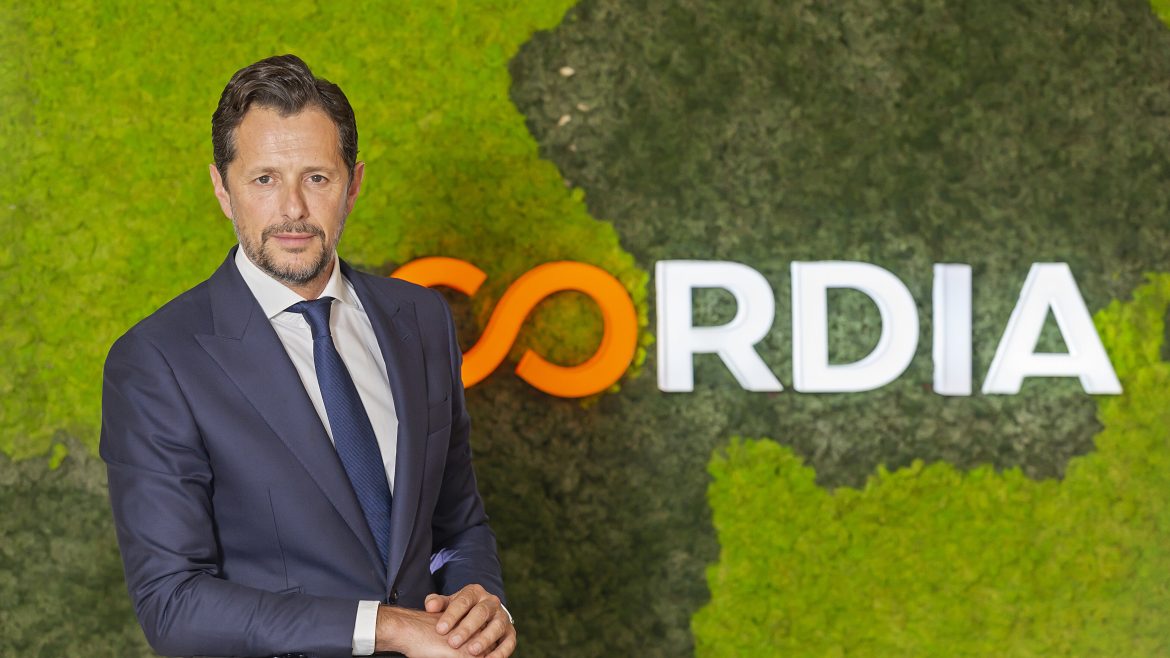



Mauricio Mesa Gomez

Eldrive Romania celebrated the opening of its new office alongside partners

Eldrive Romania celebrated the opening of its new office alongside partners 899 600 BUCHAREST REAL ESTATE CLUB

The companies part of Renalfa Solarpro Group, Renalfa, Solarpro, Toki Power Romania and Eldrive Romania, celebrated the opening of their new office alongside partners.

On May 13, the Romanian teams of the RSG celebrated the opening of their new office of approximately 750 sqm in Oregon Park, Bucharest, through an event dedicated to collaboration, networking, and strengthening relationships with partners and guests from various industries.

The program included a series of speeches delivered by representatives of the four companies sharing the new office space.

Konstantin Nenov, Founder of Renalfa Group, opened the speeches by highlighting the long-term vision behind the ecosystem formed by Eldrive, Solarpro, Renalfa, and Toki Power Romania, as well as the importance of innovation and strong partnerships. “Our business mentality is that we bet on very long-term relationships. We grow together, we develop together, and we innovate together,” he said.

George Tecușan, Country Manager of Renalfa Romania, continued by emphasizing the importance of collaboration, partnerships, and the people behind the group’s strategic objectives.

“We are innovators, but we need an ecosystem to thrive and to develop. This journey cannot be done alone,” he said.

He also thanked the partners and stakeholders present at the event for their trust, support, and contribution to the group’s development in Romania.

In his speech, Stefan Spassov, CEO of Eldrive, highlighted the strategic importance of Romania for the company and the rapid evolution of the country’s EV charging infrastructure. He emphasised Eldrive Romania’s milestone of reaching 1,000 charging points nationwide and outlined the company’s plans to continue investing in stronger and more reliable charging infrastructure, new high-performance charging hubs tailored to the Romanian market, and future-ready solutions for electric trucks and heavy-duty vehicles.

“Romania is not simply another market for Eldrive, it is a strategic priority and a country where we strongly believe in the long-term potential of e-mobility,” said Stefan Spassov.

Kamen Nedyalkov, Country Manager of Solarpro Romania, emphasized the importance of collaboration and strong partnerships in supporting the company’s projects and long-term ambitions in Romania. He also highlighted Solarpro’s commitment to delivering projects on time and at the highest quality standards.

“This is just part of the way we are being ambitious to develop the market here and to grow together with our partners,” he said.

Aurel Mindrican, Country Manager of Toki Power Romania, spoke about the company’s role within the wider Renalfa Solarpro Group ecosystem and its focus on optimizing the commercial operation and performance of production and storage capacities.

“For Toki Power Romania, the priority is the commercial operation and performance optimization of the production and storage capacities of both our partners and the Renalfa Solarpro Group,” he stated.

Camelia Popescu, Country Manager of Eldrive Romania, spoke about the journey of the local team and the importance of collaboration in accelerating the transition to electric mobility.

“This new office represents much more than a physical move. It reflects who we are becoming as a company: a place where ideas grow, partnerships strengthen, and innovation happens,” she said.

The companies also extended their thanks to Lion’s Head, the owner and operator of Oregon Park, for hosting the new shared office space.

Following the official session, guests had the opportunity to discover the new office and continue the discussions during a networking lunch focused on future projects, collaboration opportunities, and the continued development of sustainable mobility in Romania.

We would like to thank everyone who joined us for this special occasion, and we look forward to continuing to build ambitious and sustainable projects together.

West Group launches the KronenPark Residences brand, announces four residential projects in Romania and Germany, and targets a turnover of 75 million euros in 2026

West Group launches the KronenPark Residences brand, announces four residential projects in Romania and Germany, and targets a turnover of 75 million euros in 2026 900 600 BUCHAREST REAL ESTATE CLUB

West Group, a real estate developer operating on a German business model, is announcing a major milestone in the consolidation and development of its portfolio. The residential complex previously known as iResidence becomes KronenPark Residences. The rebranding follows West Group’s full acquisition of the project and its integration into the portfolio of developments the group is building under the Kronen brand.

The new identity marks the group’s commitment to the clients who have trusted the project from the very beginning and reaffirms the promise to deliver homes to the highest quality standard in the northern area of the capital. Simultaneously, West Group is announcing four residential projects under development in Romania and Germany and a consolidated projected turnover of ~75 million EUR for 2026.

The rebranding reflects a long-term portfolio strategy. West Group is simultaneously developing KronenPark Residences in Pipera, a boutique project in Cotroceni, multi-family vacation homes in Sinaia, and a residential project in Offenbach (Frankfurt), the city where the group also has a subsidiary.

„The market is maturing and buyers are making the distinction between a project and a product. KronenPark Residences is a product with a technical standard, a services ecosystem and a brand identity that we can replicate in every future development. This is the Kronen promise”, said Dan Crăciunescu, founder of West Group.

The announcement comes at a time when Bucharest’s residential market is going through a phase of maturation and consolidation. New apartments in the capital have risen in price by 24% over the past year, and estimates point to over 20,500 new homes in Bucharest and its surroundings in 2026. The northern area remains the primary development hub, with over 8,500 units in the pipeline. In this competitive landscape, buyers are becoming increasingly selective and favour well-built, energy-efficient projects with multiple amenities.

KronenPark Residences – 45% reservations in the first phase, accelerating demand

Developed on a 23,000 sqm plot in the Pipera – North Bucharest area, the project comprises 547 apartments across 8 buildings, with 57 typologies , ranging from studios to panoramic penthouses and apartments with private gardens. The first phase (273 homes) has a reservation rate of 45%. Of these, 5 percentage points were added in just three weeks, signalling a significant acceleration in demand as the project gains visibility and progresses in construction.

The construction site is progressing on schedule. The structure is fully completed. Reynaers aluminium exterior joinery with triple-pane thermal insulation glazing has been installed on all buildings. Interior partitioning is complete in building B3 and nearing completion in buildings B1 and B2. Facade installation will begin on May 18, 2026. Electrical, HVAC, sanitary, and thermal installation works are underway.

KronenPark Residences integrates smart-home infrastructure, a BMS system for energy consumption optimisation, valet parking, 24/7 reception, a secured parcel area, property management and concierge services. Vehicle circulation is exclusively underground. The project features 810 parking spaces across two levels, EV charging stations and bicycle parking. At ground level, a 15,000 sqm private park is planned, the largest in the area, with a promenade, cycling and jogging track (~500 m), a multi-purpose sports court, a wellness area and pet-dedicated spaces.

Hybrid Working Accelerates the Rise of Flex Office

Hybrid Working Accelerates the Rise of Flex Office 900 600 BUCHAREST REAL ESTATE CLUB

As the way we work shifts from traditional to decentralised models, Flex Office solutions are gaining significant ground — whether through coworking operators or landlord-led flexible offerings. This is one of the key conclusions of THE NEW DESIGN OF WORK, the office conference organised on 6 May by Bucharest Real Estate Club and Romania Property Club.

Data from iO Partners highlights a diversification of occupancy strategies, identifying five distinct working models adapted to the new economic realities. “While the Office Centric model assumes office presence of up to 75% — with a strong 70% focus on individual work — the market is witnessing a paradigm shift among organisations with lower utilisation rates. Companies recording office presence below the 30–45% threshold are already transitioning towards flexible options, optimising space by adjusting the sharing ratio and prioritising social interaction over static workstations,” explains Laura Ene, Senior Consultant, Tenant Representation, iO Partners. On the rents side, iO Partners data shows that in Bucharest rates range between €15–22 per sqm per month, while in regional centres — Cluj-Napoca, Timișoara, Iași and Brașov — they sit between €12.5 and €17 per sqm. The lowest vacancy rate is recorded in Brașov at 6.7%, while Iași leads at 13.3%; Bucharest stands at 10.3%. Between Q1 2025 and Q1 2026, approximately 300,000 sqm were transacted in Bucharest and 51,000 sqm in regional centres, with Cluj-Napoca, Timișoara and Iași being the most active markets.

Vastint is currently developing the largest office construction site in Bucharest — the second phase of Timpuri Noi Square, spanning 60,000 sqm. “The new building is designed as a landmark project that eliminates fossil fuels and relies entirely on renewable energy sources, including 1,700 sqm of photovoltaic panels, heat pumps and geothermal wells. Our goal is to achieve LEED Platinum certification at the highest level — above 100 points. Phase 2 also introduces an expanded retail mix, including New Tales — a unique concept set to combine a diverse food and beverage offer with cultural services across approximately 6,000 sqm,” says Maria Badea, Senior Leasing Manager, Vastint Romania.

CPI Property Group Romania manages an office portfolio of 280,000 sqm, representing 8% of Bucharest’s modern stock. The portfolio has been significantly strengthened through the expansion of medical and healthcare assets — buildings such as Iride Eighteen, myhive Victoria Park and Băneasa Airport Tower have been partially or fully converted into medical spaces, now hosting private healthcare operators including Provita, Leventer Medical Group and Regina Maria. “For us, this move not only diversified our tenant mix, but also increased stability and predictability, improved utilisation rates in a hybrid working context, enhanced asset value and occupancy — and, not least, created a clear differentiation from the competition,” explains Andreea Cotigă, Head of Leasing Office, CPI Property Group Romania.

The concept of coworking and flexible office spaces has evolved considerably — from being primarily associated with startups and freelancers to gaining broad adoption among large enterprise companies. “Flexible office spaces and managed offices are becoming an increasingly common choice for companies at a certain stage of their evolution, when the need for adaptability and scalability becomes essential. These solutions allow them to avoid long-term lease commitments, optimise fixed costs and integrate flexibility as a strategic component of their real estate portfolio — not merely a temporary fix,” says Andreea Birladeanu, General Manager, Mindspace Romania, one of the leading players in the flexible workspace market, operating two major hubs in key areas of Bucharest: Mindspace Business District in the Dimitrie Pompeiu area, and Mindspace Victoriei in the central zone.

Ana-Maria Nemțanu, Director of Leasing, Hagag Development Europe, adds: “We are seeing sustained demand for boutique office spaces, particularly in premium central locations where accessibility, design quality and the amenities mix play an essential role in occupancy decisions. Flexibility and service integration are becoming increasingly relevant criteria for tenants, which sustains strong interest in fully serviced private office concepts. A clear example is H Private Arghezi, our business centre in the CBD, which reached 89% occupancy in April, supported by a retention rate of nearly 95%. At the same time, we are observing a natural growth path among tenants, with some migrating from serviced spaces to conventional areas within our portfolio — confirming both the appeal of the product and the importance of services and long-term relationships.”


Cordia Romania opens sales for Centropolitan

Cordia Romania opens sales for Centropolitan 600 600 BUCHAREST REAL ESTATE CLUB

Cordia Romania, a member of the Futureal Group and one of Europe’s leading residential developers, is officially launching sales for Centropolitan, its new premium residential project in central Bucharest, steps from Bucharest Mall and Alba Iulia Square.

After generating hundreds of registrations during the pre-launch period in recent weeks, the project is now entering its pre-sales window, running from 20 April to 20 May 2026, during which buyers will have a limited-time opportunity to secure apartments at preferential prices. The launch comes against a backdrop of resilient demand and increasingly limited new-build supply.

“Bucharest remains a market with strong underlying housing demand, but it is also becoming increasingly defined by a more selective buyer profile and a more limited pipeline of high-quality, well-located new developments”, said Mauricio Mesa Gomez, Chairman of the Board, Cordia Romania and Spain. “In this context, we see a clear opportunity for projects that combine central location, quality and long-term relevance. Centropolitan reflects this strategy and we believe the pre-sales phase comes at the right moment for buyers seeking to secure an early position in a supply-constrained market”, he added.

Centropolitan represents a total investment of approximately EUR 65 million and will comprise 274 premium apartments in a wide variety of layouts, from one-room units to four-bedroom homes. The project will also include 3,345 sqm of ground-floor retail with dedicated parking on a separate level, as well as approximately 350 sqm of curated resident amenities.

During the pre-sales period, buyers will be able to reserve apartments with starting prices from approximately EUR 170,000 plus VAT for one-room apartments and reaching approximately EUR 337,000 plus VAT for four-room apartments.

Centropolitan, a new residential standard in central Bucharest

ituated on an 8,179 sqm land plot in the immediate vicinity of Bucharest Mall, a strategic acquisition finalized in September 2025, Centropolitan is designed around the “10-minute city” concept, offering residents fast access to daily urban essentials. Bucharest Mall is one minute away, Alba Iulia Square is three minutes away, and Unirii Square can be reached in around ten minutes, with strong public transport connectivity across the city.

Apartments range from 42 to 156 sqm, with generous terraces. In line with Cordia’s approach to contemporary residential living, the project will offer a curated amenity package including a residents’ gastro bar, Kids Corner, teenage Arcade Room, coworking hub and dedicated fitness and yoga areas. The ground-floor retail component will be served by a fully separate parking level, creating a seamless experience for both residents and visitors.

Construction is currently in the excavation phase, with works at a depth of -4.0 metres. Diaphragm walls are substantially complete and crown beams are approximately 10% finished.

2026 Trends with Mauricio Mesa Gomez, Cordia Romania & Spain

2026 Trends with Mauricio Mesa Gomez, Cordia Romania & Spain 1200 600 BUCHAREST REAL ESTATE CLUB

12.02.2026

Mauricio Mesa Gomez, Chairman of the Boards Cordia Romania & Spain

What were the main business results for 2025?

In 2025, at group level, Cordia delivered growth, while in Romania our year was best described as realignment, adapting to an increased fiscal and regulatory uncertainty. A key milestone was securing a strategically located, central site in Bucharest, near Bucharest Mall and close to Alba Iulia Square, and moving into execution. Construction has already started at Centropolitan, our 274-apartment premium residential flagship project, which anchors our next development cycle in Romania.

What are the company’s business targets and plans for 2026?

Our main objective for 2026 is to regain momentum and strengthen Cordia’s presence in Romania by delivering our plans and initiating a new development cycle in Bucharest. Practically, this means advancing construction milestones for Centropolitan, positioning it as a benchmark for premium, community-oriented living in a central location, while continuing to support healthy urban regeneration and sustainable communities.

In parallel, we will keep disciplined planning and rigorous risk management as predictability remains critical for avoiding supply gaps and sharp price increases for end-users.

What economic pressures (e.g., inflation, interest rates, work force issues) or regulatory and fiscal changes do you anticipate impacting the market in 2026, and how is your company preparing for them?

We expect 2026 to continue testing the market under combined pressure from fiscal constraints, restrictive financing conditions and persistent cost inflation, alongside regional geopolitical uncertainty. On the regulatory side, new rules shaping the residential buying process will directly affect sales structuring and buyer protection mechanisms. We are preparing through scenario-based planning, strict financial discipline, tighter cost control and procurement planning, design and execution optimization for cost-efficiency and durability, and compliance readiness via internal legal/procedural reviews, stronger documentation flows to buyers and reinforced governance and internal controls.

What do you see as the main risks for the Romanian real estate market in 2026? Where do you see the most attractive opportunities for growth in 2026?

The main risks are prolonged fiscal and regulatory unpredictability, tight financing and cost pressure, which can delay investment decisions and create housing supply gaps, ultimately pushing prices higher and limiting access to quality homes. The strongest opportunities are in well-positioned, well-designed projects with solid fundamentals, especially those delivering real urban value through central locations, integrated functions, and a community-first approach aligned with how residents increasingly want to live and work in the city.

Which players or strategies are going to be winners in 2026?

Winners in 2026 will be the players delivering consistently and differentiating through quality, concept and reliability, not just price. Strategies that will stand out include productivity gains through digitalization, tighter supply-chain partnerships, smart standardization. Just as importantly, companies that embrace transparent, client-protective practices will benefit from higher trust in a market where buyers are increasingly attentive to certainty and safeguards.


2025 Trends with Mauricio Mesa Gomez, Cordia România

2025 Trends with Mauricio Mesa Gomez, Cordia România 1200 600 BUCHAREST REAL ESTATE CLUB

24.02.2025


Mauricio Mesa Gomez, Country Manager of Cordia România & Spain

What were the main business results for 2024?

In 2024, a major milestone for Cordia România was the full sale of the Parcului20 project. 

Internationally, Cordia also achieved significant growth. The company successfully delivered 116 luxury apartments in Jade Tower, Fuengirola, Spain, further reinforcing its presence in the Spanish market, and is now preparing a new project there. In Hungary, the Marina City project in Budapest continued to make progress, positioning itself as a landmark sustainable development along the Danube River. While permitting delays remained a challenge in Romania, the strong demand for high-quality housing allowed Cordia to maintain a steady sales performance, reaffirming the strength of its brand and market positioning.

What are the company’s business targets and plans for 2025?

Looking ahead to 2025, Cordia aims to expand its residential portfolio in both Romania and international markets. In Bucharest, the company plans to launch new residential projects, contingent on the stabilization of urban planning regulations. These developments will focus on durability, energy efficiency, and seamless integration with the city’s infrastructure, ensuring that they meet the evolving needs of modern homebuyers.

Cordia’s international expansion will also continue at a strong pace. In Hungary, the company plans to introduce over 1,000 new apartments on the Budapest market, with a significant portion being part of the Marina City development. Other major projects include the expansion of Sasad Resort and the next phase of the Thermal Zugló project in Budapest.

What are the main challenges & opportunities for the real estate market in 2025?

The Romanian real estate market is expected to maintain its momentum in 2025, driven by sustained demand in the medium and medium-high residential segments. However, one of the most pressing issues remains the complexity and delays in obtaining building permits, which hinder the timely launch of new projects. Additionally, economic pressures, including a potential increase in VAT and the removal of tax incentives for construction workers, could lead to higher costs for developers and reduced affordability for buyers. Financing constraints and rising material costs further add to the uncertainty.

Despite these challenges, the market also presents significant opportunities. Demand for high-quality, sustainable housing continues to rise, with buyers increasingly prioritizing energy efficiency and smart home technologies. This trend offers developers a chance to differentiate their projects and attract buyers looking for long-term value.

The stabilization of urban planning regulations and improved collaboration with local authorities in Bucharest could also help streamline project approvals and create a more favorable investment climate.

What economic pressures (e.g., inflation, material costs) or regulatory changes do you anticipate impacting the market in 2025, and how is your company preparing for them?

The Romanian real estate sector in 2025 is expected to face a mix of economic and regulatory pressures that could impact both developers and buyers. One of the key concerns is the potential increase in VAT, which could make housing less affordable for certain buyer segments. Additionally, the removal of tax incentives for construction workers is likely to raise labor costs, which, combined with the ongoing rise in material prices, could push overall development costs higher. The uncertainty surrounding urban planning approvals also remains a significant challenge, affecting the pace at which new projects can be launched.