



01.10.2026
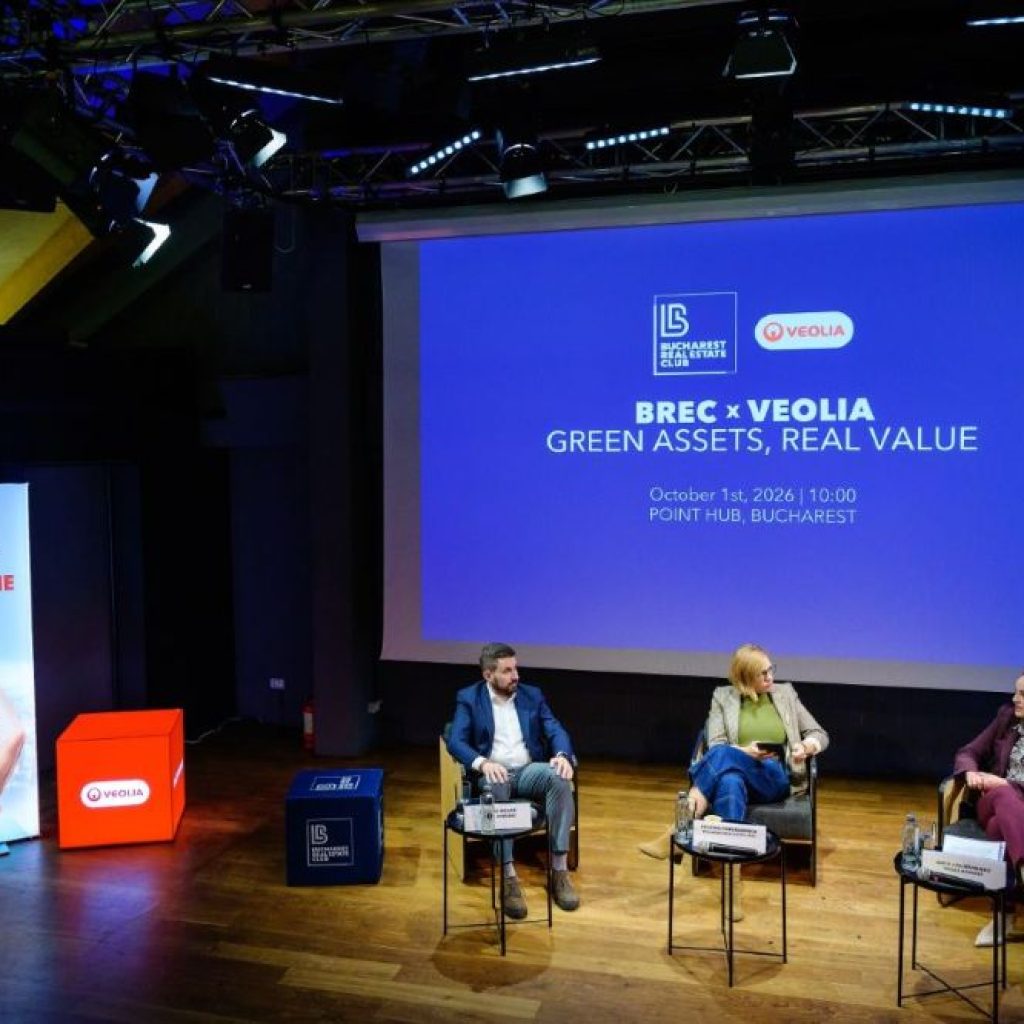
Veolia talks about “integrated” water and energy solutions. For a developer, what does “integrated” actually mean – and why should it matter?
Andrei Bejan: It means we stop treating water, heating, cooling and power as separate line items handled by separate suppliers and start designing them as one system from the earliest project phase. A developer who does this doesn’t just save on installation — they gain a single operational logic that stays efficient for the entire life of the building. When you plan the energy and water strategy together, the whole becomes far more than the sum of its parts: one solution’s waste can become another’s resource. That’s the essence of the circular thinking we bring to real estate.
This has been a year in which energy became the single biggest cost surprise for CEOs worldwide. What is the first thing a developer should rethink in a new project?
Anca Călimăneanu: Predictability. The instinct is to look at the upfront investment, but the real risk today sits in the next 20 or 30 years of operation, exposed to volatile energy prices. The most common mistake we see is postponing the energy decision until late in the design, when the cheapest and most effective options — like geothermal fields — are no longer feasible. Decoupling from price volatility is a decision you make on the drawing board, not after handover.
Let’s talk results. Which projects best show what these solutions deliver in practice?
Andrei Bejan: The One United Properties developments are a strong example. Across One Lake Club and One Lake District, we reach 80% of energy from renewable sources, cut costs by at least 30%, and reduce emissions by nearly 3,900 tonnes of CO₂ every year — largely by recovering heat from wastewater. At One High District, one of Romania’s most ambitious heat-pump projects, 310 geothermal probes drilled to 120 metres deliver over 6,600 MWh of renewable energy annually, under a single 30-year contract covering energy, water and facility management.
Anca Călimăneanu: And One Peninsula was a genuine first for Romania — the first residential project to use large-capacity ground-source heat pumps for simultaneous heating, cooling and hot water, cutting energy costs by up to 50% versus conventional gas-and-chiller systems.
GeoExchange is central to your offer. What makes it so adaptable across project types?
Anca Călimăneanu: GeoExchange uses the stable temperature of the ground to provide heating, cooling and domestic hot water at once. That flexibility is exactly why it fits so many contexts — residential, retail, logistics, or the mixed-use developments so common in Romania. In a mixed scheme, one building may need cooling while another needs heating, and the system simply moves that energy between them instead of wasting it. Crucially, it works not only for new builds but for existing buildings too — which matters for developers holding older assets.
Beyond geothermal, where else is there value most people overlook?
Andrei Bejan: Heat recovery is the quiet champion. Our Apa Nova Vitan building is the first project in Romania to recover energy directly from the sewage system, combined with photovoltaics — bringing costs up to 90% below classic district heating. On the power side, pairing photovoltaics with battery storage (BESS) is reshaping the economics: with negative energy prices in certain hours and shifting grid tariffs, storage lets you use your own clean energy when it’s most valuable rather than selling it back for nothing. We’ve already deployed over 400 MWp of solar and some of Romania’s largest battery systems, including a 14 MWh installation at Cetate, Dolj.
The closing question – five years from now, which of these solutions moves from “competitive differentiator” to “minimum requirement”?
Andrei Bejan: Most of them. Regulation, banks and tenants are converging on the same expectation. An energy-efficient asset already commands a premium and easier access to green financing; soon, the absence of these features will be a discount — or a deal-breaker. The developers who treat resource efficiency as core strategy today are simply building the assets that will still be financeable and leasable tomorrow.