



Vastint Romania

HILS Development appoints new Head of Marketing: Monica Bejan joins the management team

HILS Development appoints new Head of Marketing: Monica Bejan joins the management team

HILS Development appoints new Head of Marketing: Monica Bejan joins the management team 800 600 BUCHAREST REAL ESTATE CLUB
HILS Development appoints new Head of Marketing: Monica Bejan joins the management team
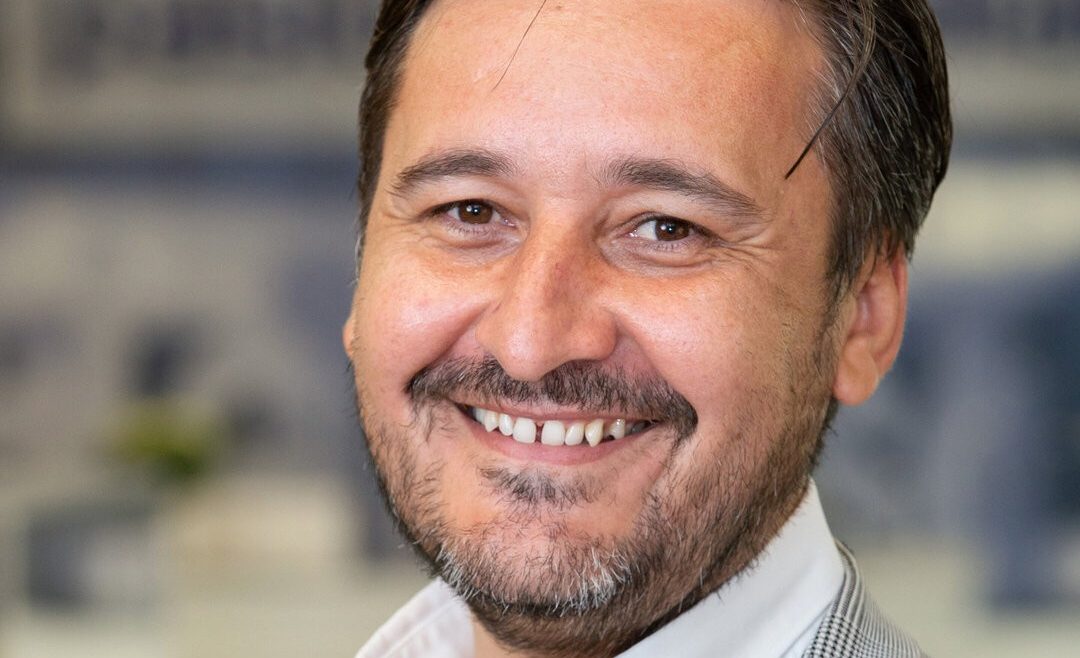
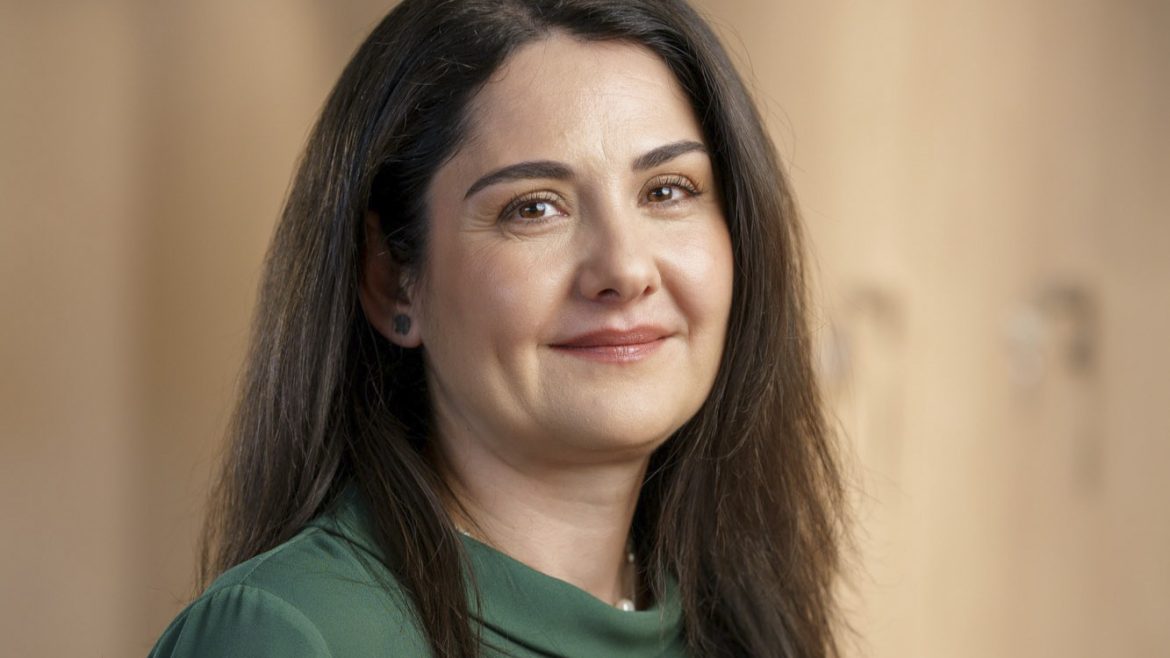
  • Monica Bejan takes over as Head of Marketing at HILS Development, playing a key role in overseeing the department’s strategy and team while supporting the company’s commercial objectives.
  • With over 20 years of experience in marketing and communications, including 13 years in the real estate sector, Monica Bejan will contribute to strengthening the HILS Development brand and increasing the visibility of its projects.

HILS Development, one of Romania’s most active real estate developers, with 21 years of experience in the industry, is strengthening its management team with the appointment of Monica Bejan as Head of Marketing.

In her new role, Monica Bejan’s primary objective will be to provide integrated leadership of the Marketing Department’s strategy and operations. Her responsibilities will include planning and implementing marketing campaigns, leading the marketing team, and monitoring performance.

In addition, Monica will work closely with internal teams to ensure seamless alignment across communications, support HILS Development’s commercial objectives, and deliver a consistent and valuable customer experience.

“I believe a real estate project is about much more than a building. It is about how people live, how they feel, and how they organize their everyday lives within that space. This is precisely what attracted me to HILS Development: its commitment to creating places where comfort, everyday needs, and a sense of belonging to a community truly matter. I am delighted to contribute to this vision by drawing on my experience in marketing and real estate, while exploring new ways in which communication can reflect the true value of a project for the people who choose to call it home.” – Monica Bejan, Head of Marketing, HILS Development.

Over 20 years of experience in marketing and communications

The newly appointed Head of Marketing brings over 20 years of experience in marketing and communications to the HILS team, with extensive expertise in marketing strategy, corporate communications, public relations, branding, and digital communications.

For the past 13 years, she has focused on the real estate sector, specifically the office development segment, working at Skanska Commercial Development Europe. Her professional background includes experience in both Romania and the Czech Republic, where she managed marketing and communications responsibilities for projects across both markets.

With her extensive experience and strategic perspective, Monica will play a key role in strengthening the HILS Development brand and increasing the visibility of the developer’s residential portfolio.

About HILS Development

Founded by entrepreneur Ionut Negoita, HILS Development has 21 years of experience in the real estate industry and a portfolio of approximately 12,000 homes built and sold. The company develops large-scale residential and mixed-use projects, with a strong focus on urban regeneration, sustainability, accessibility, and connectivity.

HILS Development currently has seven residential projects located in the eastern and northern areas of Bucharest. Through its developments, the company aims to create communities built around the principles of the “15-minute city,” where homes are seamlessly connected to public transportation, retail facilities, essential services, and leisure areas.

Eldrive Romania Revises Its 2026 Expansion Plans: 100 MW of Installed Charging Capacity Instead of 84 MW

Eldrive Romania Revises Its 2026 Expansion Plans: 100 MW of Installed Charging Capacity Instead of 84 MW

Eldrive Romania Revises Its 2026 Expansion Plans: 100 MW of Installed Charging Capacity Instead of 84 MW 900 600 BUCHAREST REAL ESTATE CLUB
Eldrive Romania Revises Its 2026 Expansion Plans: 100 MW of Installed Charging Capacity Instead of 84 MW

Against the backdrop of stronger-than-expected growth in interest in electric mobility, both among individuals and businesses, Eldrive Romania is revising its plans to expand its nationwide electric vehicle charging network. The company’s new target for 2026 is to reach 100 MW of installed charging capacity in Romania, up from the previously projected 84 MW, representing a 19% increase.

“The market for new and used electric vehicles has grown significantly, and these vehicles tend to cover high mileages and be used intensively. As a result, we have seen a steady increase in the use of our charging network,” said Camelia Popescu, Country Manager of Eldrive Romania.

At the end of 2025, Eldrive Romania had 42 MW of installed charging capacity. In May 2026, the company announced that it was targeting a doubling of this capacity to 84 MW by the end of the year. This target has now been revised upwards.

This means that Eldrive Romania plans to add 68 MW of new installed capacity during 2026, on top of the 42 MW already in operation at the end of 2025.

“We have accelerated all the charging station installation projects currently underway in order to better serve Romania’s growing number of electric vehicle users. We are therefore in a position to announce that our new target for 2026 is 100 MW, instead of the 84 MW announced earlier this year,” explained Camelia Popescu.

According to data from ACAROM – the Romanian Automobile Manufacturers Association – and the Directorate for Driving Licences and Vehicle Registration, the market share of new electric vehicles increased by 45% in the first nine months of 2026 compared with the same period in 2025. This accelerating electrification of Romania’s vehicle fleet is also reflected in the growing use of Eldrive’s charging stations.

Ultra-fast charging and dedicated infrastructure for electric fleets

Eldrive Romania’s upcoming development agenda includes 14 ultra-fast charging stations with a capacity of 400 kW, as well as an expansion of its customer base among companies operating electric vehicle fleets.

This segment includes not only passenger cars, but also light and heavy commercial vehicles, including electric trucks.

This is one of the first steps Eldrive is taking to further support electric mobility for transport companies operating electric trucks in their fleets. Over the next two years, the company plans to develop 15 dedicated charging hubs for electric trucks.

The number of charging points in Eldrive’s Romanian network has now exceeded 1,000, with 93% being DC fast-charging points and 7% AC semi-fast charging points.

In 2025, Eldrive inaugurated Romania’s first 1 MW charging installation, at SUPERNOVA Pitești. The next 1 MW installation is scheduled to become operational in Drajna.

Other major charging hubs in Eldrive Romania’s network are located in Fetești, Lehliu, One Club Grozăvești in Bucharest, and Craiova (Antares).

New route planner makes long-distance EV travel easier

In summer 2026, the Eldrive Romania app received a significant upgrade with the introduction of a route planner. The new feature makes it easier for electric vehicle drivers to plan journeys and identify suitable charging stops along their routes.

Eldrive case study featured by UN Global Compact Academy

Eldrive, an electric vehicle charging infrastructure operator active in Bulgaria, Romania and Lithuania, has been featured in a case study published by the UN Global Compact Academy, an initiative of the United Nations that brings together more than 20,000 companies from over 160 countries with the aim of promoting responsible business practices.

Participating companies commit to ten principles covering human rights, labour, environmental protection and anti-corruption, integrating them into their operations and publicly reporting on their progress on an annual basis. Eldrive has been a participant in the initiative since September 2025.

The UN Global Compact Academy’s library now also includes a case study dedicated to Eldrive, the only case study focused specifically on the development of electric vehicle charging infrastructure.

Titled “Building infrastructure before the market catches up: Eldrive’s case for investing ahead of demand”, the study examines how Eldrive developed its charging network in Bulgaria, Romania and Lithuania before widespread electric vehicle adoption had fully materialised.

The case study addresses a challenge common to emerging electric mobility markets: drivers are reluctant to switch to electric vehicles without access to reliable charging infrastructure, while site owners and investors are hesitant to support infrastructure development without proven demand.

About Eldrive Romania

Eldrive is a brand of international company Eldrive Holding GmbH, operating in Romania through eMobility Charging S.R.L. Eldrive is also active in Bulgaria and Lithuania.

The international Eldrive network currently includes more than 4,000 active charging points, of which more than 1,000 are located in Romania.

Eldrive Romania is one of the leading electric vehicle charging service providers in the country. Eldrive charging stations are located in the parking areas of shopping centres, office buildings, residential developments and fuel stations.

Official company website: eldrive.eu

The Eldrive Romania app is available on:

App Store

Google Play

Water, Energy and the Real Economics of Green Buildings

Water, Energy and the Real Economics of Green Buildings

Water, Energy and the Real Economics of Green Buildings 600 600 BUCHAREST REAL ESTATE CLUB

01.10.2026

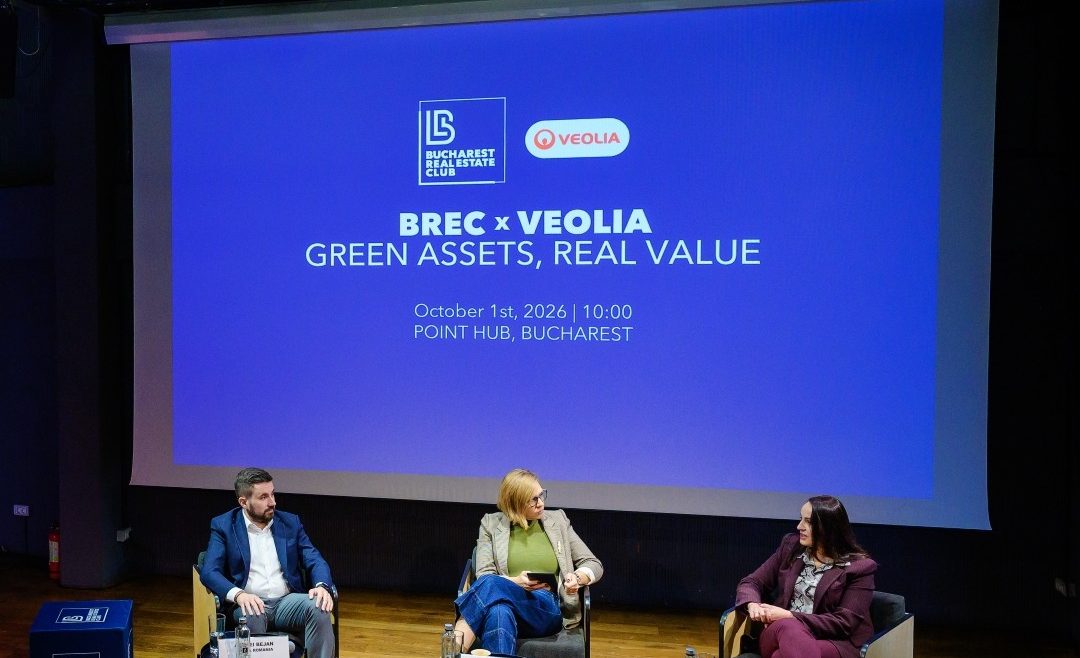
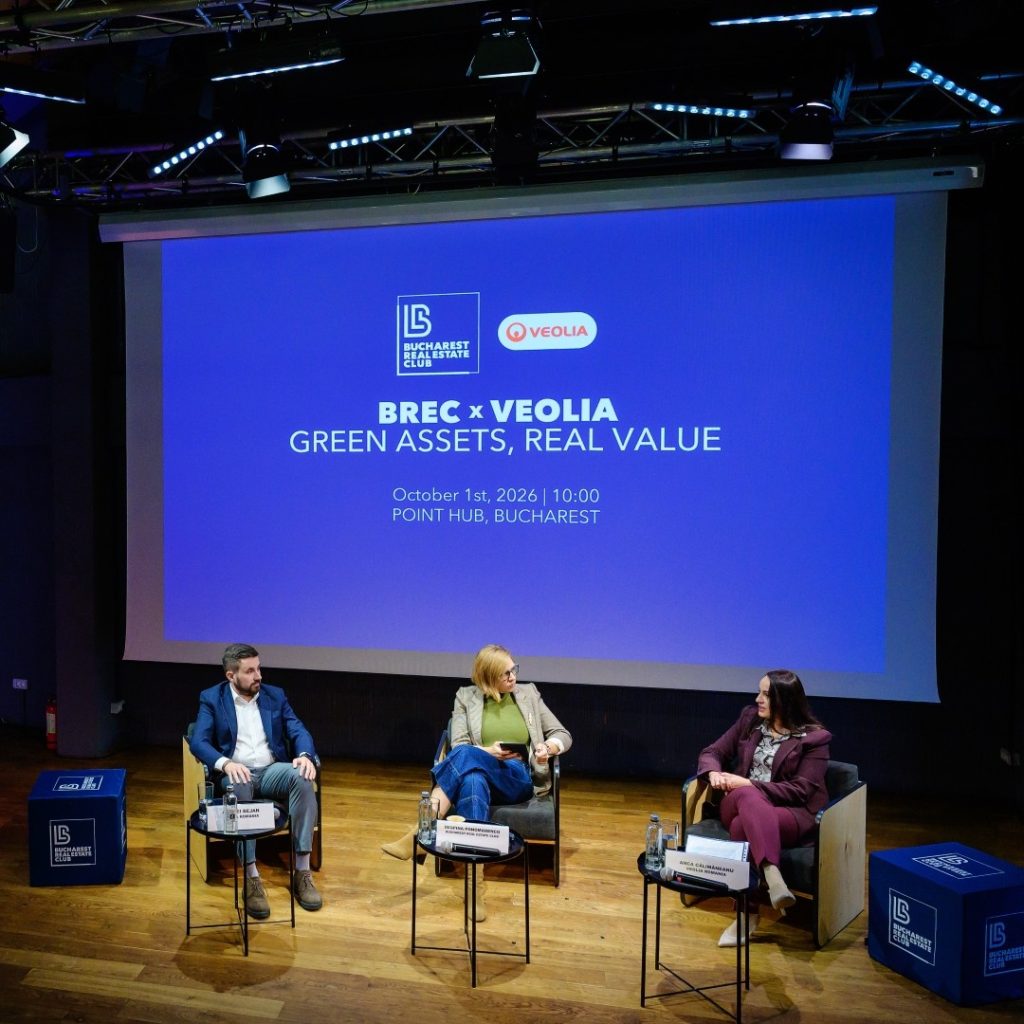
A conversation with Anca Călimăneanu (Senior Sales Manager) and Andrei Bejan (Deputy Business Development Director), Veolia România, following the first BREC × Veolia event

Veolia talks about “integrated” water and energy solutions. For a developer, what does “integrated” actually mean – and why should it matter?

Andrei Bejan: It means we stop treating water, heating, cooling and power as separate line items handled by separate suppliers and start designing them as one system from the earliest project phase. A developer who does this doesn’t just save on installation — they gain a single operational logic that stays efficient for the entire life of the building. When you plan the energy and water strategy together, the whole becomes far more than the sum of its parts: one solution’s waste can become another’s resource. That’s the essence of the circular thinking we bring to real estate.

This has been a year in which energy became the single biggest cost surprise for CEOs worldwide. What is the first thing a developer should rethink in a new project?

Anca Călimăneanu: Predictability. The instinct is to look at the upfront investment, but the real risk today sits in the next 20 or 30 years of operation, exposed to volatile energy prices. The most common mistake we see is postponing the energy decision until late in the design, when the cheapest and most effective options — like geothermal fields — are no longer feasible. Decoupling from price volatility is a decision you make on the drawing board, not after handover.

Let’s talk results. Which projects best show what these solutions deliver in practice?

Andrei Bejan: The One United Properties developments are a strong example. Across One Lake Club and One Lake District, we reach 80% of energy from renewable sources, cut costs by at least 30%, and reduce emissions by nearly 3,900 tonnes of CO₂ every year — largely by recovering heat from wastewater. At One High District, one of Romania’s most ambitious heat-pump projects, 310 geothermal probes drilled to 120 metres deliver over 6,600 MWh of renewable energy annually, under a single 30-year contract covering energy, water and facility management.

Anca Călimăneanu: And One Peninsula was a genuine first for Romania — the first residential project to use large-capacity ground-source heat pumps for simultaneous heating, cooling and hot water, cutting energy costs by up to 50% versus conventional gas-and-chiller systems.

GeoExchange is central to your offer. What makes it so adaptable across project types?

Anca Călimăneanu: GeoExchange uses the stable temperature of the ground to provide heating, cooling and domestic hot water at once. That flexibility is exactly why it fits so many contexts — residential, retail, logistics, or the mixed-use developments so common in Romania. In a mixed scheme, one building may need cooling while another needs heating, and the system simply moves that energy between them instead of wasting it. Crucially, it works not only for new builds but for existing buildings too — which matters for developers holding older assets.

Beyond geothermal, where else is there value most people overlook?

Andrei Bejan: Heat recovery is the quiet champion. Our Apa Nova Vitan building is the first project in Romania to recover energy directly from the sewage system, combined with photovoltaics — bringing costs up to 90% below classic district heating. On the power side, pairing photovoltaics with battery storage (BESS) is reshaping the economics: with negative energy prices in certain hours and shifting grid tariffs, storage lets you use your own clean energy when it’s most valuable rather than selling it back for nothing. We’ve already deployed over 400 MWp of solar and some of Romania’s largest battery systems, including a 14 MWh installation at Cetate, Dolj.

The closing question – five years from now, which of these solutions moves from “competitive differentiator” to “minimum requirement”?

Andrei Bejan: Most of them. Regulation, banks and tenants are converging on the same expectation. An energy-efficient asset already commands a premium and easier access to green financing; soon, the absence of these features will be a discount — or a deal-breaker. The developers who treat resource efficiency as core strategy today are simply building the assets that will still be financeable and leasable tomorrow.

Vitalis Consulting Celebrates 20 Years: Managed Projects Portfolio Reaches €3.5 Billion and 7 Million Square Meters

Vitalis Consulting Celebrates 20 Years: Managed Projects Portfolio Reaches €3.5 Billion and 7 Million Square Meters

Vitalis Consulting Celebrates 20 Years: Managed Projects Portfolio Reaches €3.5 Billion and 7 Million Square Meters 900 600 BUCHAREST REAL ESTATE CLUB
Vitalis Consulting Celebrates 20 Years: Managed Projects Portfolio Reaches €3.5 Billion and 7 Million Square Meters

Vitalis Consulting, one of the leading real estate project management companies in Romania, is marking 20 years of operations. Over the past two decades, the company has been involved in projects with a cumulative estimated value of approximately €3.5 billion, spanning a total surface area of around 7 million square meters across the entire construction and real estate development spectrum.

Built over the last 20 years, the company’s portfolio encompasses residential developments, office buildings, retail and logistics hubs, hotels, and medical facilities, alongside recent expansions into renewable energy investments. This diversity reflects both the company’s evolution and its team’s capacity to manage projects of varying complexity.

From 5 Employees to an 85-Strong Team

Vitalis Consulting was founded in 2006 by Florin Popa and Costi Anghel during a period when Romania’s real estate and construction sectors were undergoing rapid expansion. As investments grew and projects became increasingly complex, developers demanded greater control, coordination, and professional management throughout the development process. Recognizing this market shift, the founders established a local partner dedicated to representing investor interests and delivering professional project management.

Starting with a team of five and a turnover of approximately €100,000 from its first headquarters on Pictor Iscovescu Street in Bucharest, Vitalis’ early project roster included Cortina Residence, the Hewlett Packard – Novo Park Building, and EvoCasa Selecta. Two decades later, Vitalis employs around 85 specialists and projects a turnover of approximately €5 million for 2026.

Lessons from Times of Crisis

Key milestones in the company’s trajectory were shaped by challenging economic climate shifts.

“The 2008 financial crisis caught us near the start of our journey, with a much more fragile structure than what we have today. As the market contracted, projects became scarcer and harder to secure, creating immense pressure for such a young company,” said Florin Popa, Co-Founder of Vitalis Consulting.

Another critical turning point was the pandemic, characterized by volatile market rules, halted or delayed projects, and limited future visibility.

“We had to mobilize quickly and find solutions in an unprecedented context,” added Costi Anghel, Co-Founder of Vitalis Consulting. The post-pandemic period did not bring an immediate return to normal; the market remained fragile for a time, and investment decisions became harder to predict amid broader economic and political headwinds.

Landmark Projects

Vitalis Consulting has contributed to developments that have shaped the urban landscape of Bucharest and Romania.

“Our portfolio over these 20 years truly tells our company’s story: from landmark mixed-use developments like One Cotroceni Park to revived historical monuments such as the Corinthia Grand Hotel du Boulevard, Știrbei Palace on Calea Victoriei, and Magazinul București, through to unique assets like Radisson Blu at Cota 1400 in Sinaia. Each brought a distinct level of complexity and proved how far we can push a project”, explained Alexandru Samoilă, Managing Director of Vitalis Consulting.

Strategic Growth Directions

Looking ahead, the company identifies significant potential in photovoltaic and renewable energy projects, expecting substantial growth driven by rising demand for energy infrastructure investments. To support this strategic focus, Vitalis continues to invest in talent; in the first half of 2026 alone, the company recruited nine professionals in key project management leadership roles.

About Vitalis Consulting Vitalis Consulting is a benchmark company in Romania’s project management and construction consultancy market, boasting 20 years of expertise and a portfolio of over 400 completed projects. The firm provides specialized services that afford developers, lenders, and asset owners enhanced oversight over project quality and budgets — ranging from project and cost management to site management, fit-outs, technical due diligence, and H&S coordination. The Vitalis team brings together 85 specialists across sectors including office, residential, retail, mixed-use, industrial & logistics, hospitality, healthcare, education, and historic monuments. Guided by its motto, “Building Trust,” the company aims to deliver every project on time, within budget, and beyond expectations.

Vastint Romania launches The Venue Timpuri Noi

Vastint Romania launches The Venue Timpuri Noi

Vastint Romania launches The Venue Timpuri Noi 900 600 BUCHAREST REAL ESTATE CLUB
Vastint Romania launches The Venue Timpuri Noi

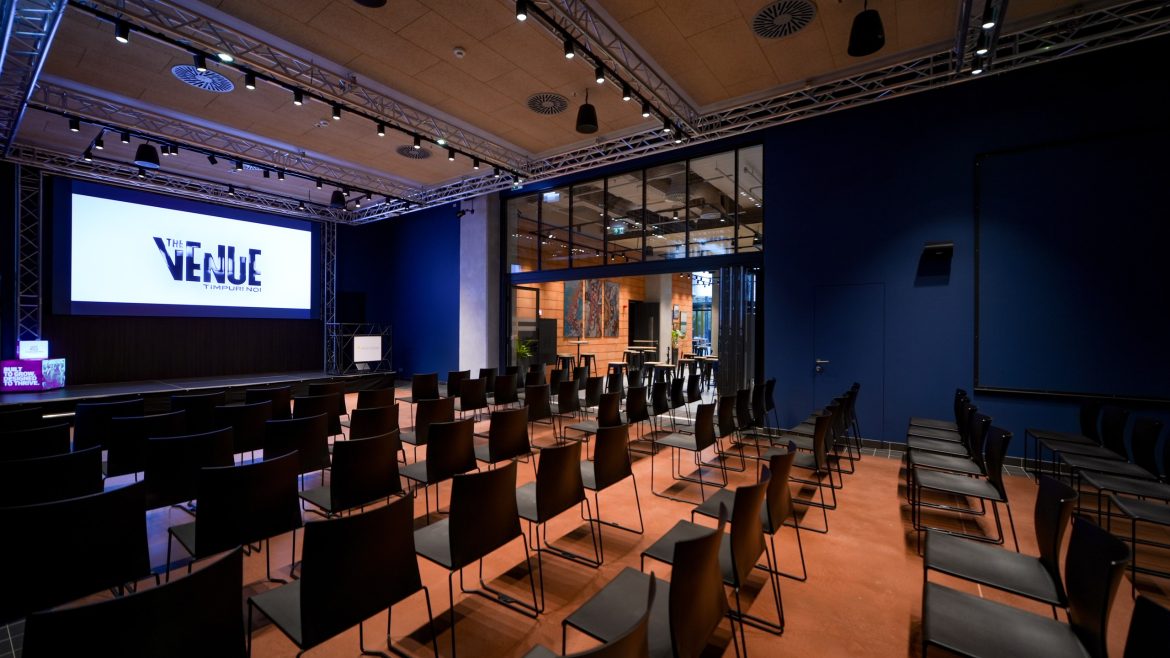
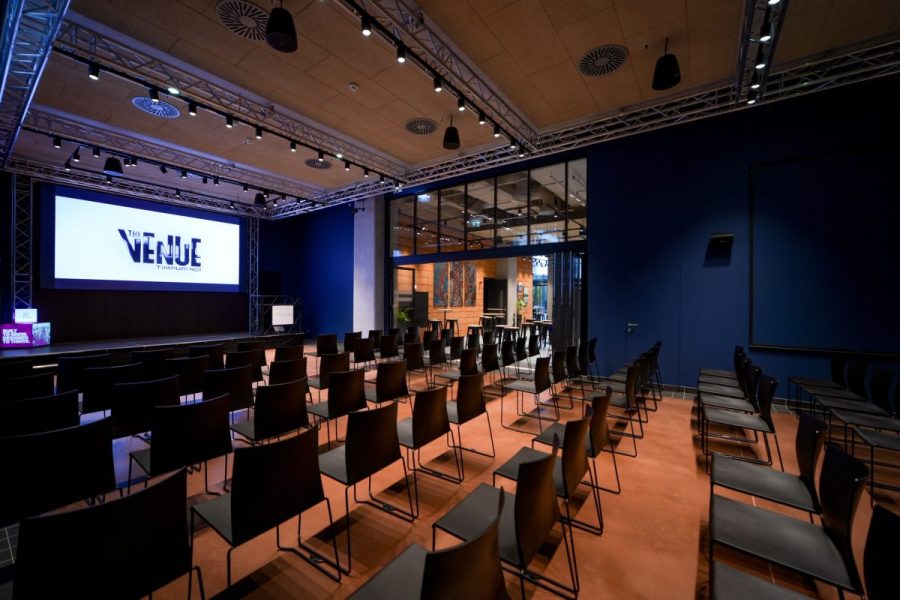
Vastint Romania, part of VASTINT Group, an international real estate company with over 36 years of experience in the real estate field, has launched The Venue Timpuri Noi Square, a dedicated space for conferences, meetings and events, further opening the project to the business community and the city.

With approximately 400 sqm of indoor space and a 300 sqm terrace, the highly flexible and fully equipped venue can accommodate a wide range of event formats, from intimate meetings to conferences for approximately 300 participants. The Venue is open not only to Timpuri Noi Square tenants, but also to all the companies looking for a fresh, modern and versatile setting for their events.

One of The Venue’s key advantages is the ecosystem around it. Located next to Timpuri Noi metro station, it offers easy access from different areas of Bucharest, while the restaurants within Timpuri Noi Square can complement events with a variety of catering options. This combination makes it possible to organize conferences, business meetings and social events in one well-connected destination, with many of the services guests and organizers may need available within the project.

The Venue’s interior concept was developed by turnerbates Design & Architecture, a London-based studio working across hospitality, workplace, leisure and mixed-use projects. Partnering with Vastint across Europe since 2017, the studio led the concept design and provided technical assistance throughout the construction works, translating the site’s industrial heritage into a flexible venue for business, cultural and social events.

“The Venue represents the Vastint teams continued evolution in how the mix of blended environments for work and leisure and social interaction, are at the forefront of their strategy.

Our design approach was to make the space flexible enough to accommodate a formal business conference but also have the personality for a private function such as a wedding or birthday party,” said Howard Bates, co-founder of turnerbates Design & Architecture.

“The concept drew inspiration from a traditional gallery space, creating a flexible backdrop that can adapt to different uses and evolve over time.

With this in mind, the material palette is deliberately restrained. Brick, steel and concrete reference the site’s industrial heritage, whilst offering practical and robust qualities. These are paired with warm lighting and softer elements, including fabric curtains and wood wool ceilings, providing comfort and enhancing the acoustic qualities of the space.

Art and curation were also central to the design. We created a series of large-scale bespoke abstract collages, alongside a carefully curated selection of work by local artists. Together, these pieces bring colour and character to the space, whilst reflecting the local community and creating a strong sense of identity.”, added Joanna Gomm, Lead concept designer and Associate Design & Architecture.

The resulting space is designed to be both adaptable and distinctive, providing a versatile setting that can transition seamlessly between business, cultural and social events.

“For us, The Venue is more than just a new facility added to the project. It is another reason for people to come to Timpuri Noi Square even if they do not work here, and another way for the project to come to life beyond regular office hours. Also, something I find increasingly valuable, especially in a city like Bucharest, is proximity. Being able to work, have lunch, exercise, meet people or attend an event without spending a significant part of the day travelling from one place to another ultimately means gaining valuable time. And time is the new luxury. In real estate, we build for decades, and all three phases of Timpuri Noi Square reflect this principle. That is why, for me, the question is not only what the market wants today, but what will make a place remain relevant 10, 20 or 30 years from now. I think less about buildings as physical objects and more about the life that will unfold in and around them.,” declared Antoniu Panait, Managing Director, Vastint Romania.

The development strategy for Timpuri Noi Square reflects a broader vision for the project: to evolve from a traditional office development into a fully integrated urban destination, where workplaces are complemented by dining, events, services and spaces designed for interaction, creating a place that remains active and relevant well beyond office hours.

Timpuri Noi Square is the project that best embodies the Vastint team’s philosophy. Conceived from the beginning as a mixed-use development, the project, which began in 2010, was planned in three phases. The first three buildings, totaling 52,100 sqm of GLA, have been completed and are fully leased.

The second phase, currently at an advanced stage of construction – with the structure 100% completed, architecture works at 45%, MEP installations at 75% and the façade at 65% – is the largest office development currently under construction in Bucharest. It will add 60,000 sqm of GLA across two buildings, TN04 and TN05, as well as 690 parking spaces, 1,700 sqm of photovoltaic panels and 200 geothermal wells. The project also features façades designed to deliver genuine energy efficiency, full redundancy of technical equipment and the complete elimination of natural gas, a first for the local market.

Timpuri Noi Square 2 project is set for completion in Q4 2026 and fully operational in 2027.

Romeo Ghica, Hercesa Romania: CATUC shifts the debate from density to quality of living

Romeo Ghica, Hercesa Romania: CATUC shifts the debate from density to quality of living

Romeo Ghica, Hercesa Romania: CATUC shifts the debate from density to quality of living 535 600 BUCHAREST REAL ESTATE CLUB

The debate surrounding the new Territorial Planning, Urbanism and Construction Code (CATUC) risks focusing excessively on urban planning indicators and project density, while the real challenge is improving quality of living and integrating residential developments into the urban fabric, according to Romeo Ghica, Operations Manager at Hercesa Romania.

According to Ghica, urban planning cannot be reduced to discussions about CUT, POT or the number of apartments built on a plot of land. Instead, it should be assessed through the lens of the services and infrastructure that support a community.

“Urban planning is neither the exclusive domain of public authorities nor of developers. It is fundamentally about quality of living. This is not determined solely by the apartment itself or by what the developer builds within the project, but also by the services that residents rely on, such as schools, kindergartens, infrastructure, public spaces, and all the other components that contribute to the functioning of a community”, says Romeo Ghica.

In his view, residential development should be seen as an integrated process in which both developers and public authorities contribute to the same objective: creating functional and sustainable urban areas.

“The ideal scenario is one in which we move increasingly closer to the European model, where developers are required to integrate urban services and amenities into their projects, with the support and cooperation of public authorities.”

CUT is not the most important issue

One of the most debated provisions of the new code is the limitation on exceeding certain urban density thresholds. From Romeo Ghica’s perspective, the discussion around CUT is often overemphasized.

“A project’s density is only one part of the equation. Density alone is not decisive for quality of living. There are far more important factors that we risk overlooking.”

According to Ghica, large-scale residential developments rarely reach the theoretical maximum values allowed by urban planning indicators in practice, as they are further constrained by requirements regarding setbacks, distances between buildings, integration with existing infrastructure and other technical conditions.

“In reality, the existence of a certain CUT does not automatically mean that this entire level can actually be built. Numerous other urban planning parameters influence the final form of a project.”

Residential developments connected to urban amenities

The Hercesa representative believes that a modern approach to urban planning requires evaluating density and resident services simultaneously.

“If a residential project includes community facilities that are relevant to both the area and its residents, these should be considered a contribution to quality of living. We cannot assess only the number of apartments while ignoring the services that are created around them.”

In his opinion, public discussions about real estate development sometimes risk creating an artificial divide between developers and local administrations.

“Apartments without urban amenities cannot function properly and urban amenities without residents are pointless. Urban quality is the result of combining these two components.”

Urbanization agreements represent a step forward

CATUC introduces the concept of urbanization agreements, through which developers and local authorities can collaborate on public investments necessary for the development of specific areas.

According to Romeo Ghica, the importance of this provision lies not necessarily in its immediate effects, but in the fact that it formally acknowledges the need for closer cooperation between the public and private sectors.

“The Code confirms this necessity and creates the foundations for better collaboration. Previous legislation did not explicitly address this approach.”

However, for these mechanisms to function on a broader scale, updates to other legislative frameworks concerning public-private partnerships, public utility regulations and property rights will also be necessary.

“The Code alone cannot resolve all of these issues. It provides direction and recognizes the need for collaboration, but effective implementation requires the harmonization of several legislative acts.”

Romania moves closer to the spanish model

Romeo Ghica also notes a gradual convergence between residential development trends in Romania and those seen in the Spanish market. In recent years, the local market has increasingly focused on projects that provide residents with dedicated amenities and community spaces.

“We are seeing more and more projects that include internal areas reserved exclusively for residents, such as green spaces, playgrounds, recreation areas, sports facilities, and other community-focused services.”

This approach is already well established in cities such as Madrid and represents one of the key directions of evolution for the European residential market.

“The trend is very similar to what happened in Spain. Housing is no longer viewed simply as an apartment, but as part of a community that offers additional services and amenities to residents.”

Iulia IANA Joins the IMPACT Group as CEO of IMPACT Finance & Sales

Iulia IANA Joins the IMPACT Group as CEO of IMPACT Finance & Sales

Iulia IANA Joins the IMPACT Group as CEO of IMPACT Finance & Sales 559 600 BUCHAREST REAL ESTATE CLUB

IMPACT Developer & Contractor, one of Romania’s leading real estate developers and a company listed on the Bucharest Stock Exchange, announces the appointment of Iulia IANA as CEO of IMPACT Finance & Sales, a company within the IMPACT Group specializing in sales, marketing, brokerage, commercial leasing, and IT services for projects developed by IMPACT.

The appointment is part of the IMPACT Group’s strategy to strengthen its integrated business model and accelerate commercial performance, in the context of a new phase of development focused on growth and operational efficiency.

In her new role, Iulia IANA will oversee the company’s commercial activities, with responsibility for sales, marketing, IT, and the development of commercial processes across the IMPACT Group’s portfolio of projects. Her mandate includes developing marketing and sales strategies, optimizing conversion and customer retention processes, enhancing commercial performance, and facilitating customers’ access to financing solutions for home purchases. In this position, she will contribute to the commercial strategy for projects within the IMPACT Group portfolio, including GREENFIELD Băneasa, ARIA Verdi, GREENFIELD Copou, and BOREAL Plus.

Iulia IANA brings more than 14 years of experience in marketing, strategy, and management across industries including real estate, automotive, and retail. Prior to joining IMPACT Finance & Sales, she served as Marketing Director at another real estate development company, where she led the marketing and communications strategy for the company’s portfolio and contributed to the development and positioning of both the corporate brand and its residential projects. Her expertise includes designing and implementing integrated marketing, digital, communications, and branding strategies, leading multidisciplinary teams, and managing marketing budgets, with a strong focus on linking marketing investments to lead generation, commercial opportunities, and sales performance.

“I am joining the IMPACT Group at a time when there is significant potential for further portfolio growth and, consequently, for enhanced commercial performance. My mandate at IMPACT Finance & Sales is to build an integrated commercial function in which marketing, sales, CRM, technology, and data operate as part of the same business process. The objective is simple: to establish measurable processes, gain the deepest possible understanding of our customers, and create a direct link between the investments we make and the commercial results we generate. I believe that a strong brand and commercial performance must be built together,” said Iulia IANA, CEO of IMPACT Finance & Sales.

“By strengthening IMPACT Finance & Sales, we aim to build a more integrated commercial structure, focused on performance and customer needs. Iulia brings relevant experience in real estate, brand development, and the management of integrated marketing and business strategies, at a time when IMPACT is undergoing its most extensive phase of growth and consolidation of its integrated business model. Her expertise and business perspective will further strengthen the Group’s strategic direction during this new stage of development,” said Dan Sebastian Câmpeanu, CEO of IMPACT Developer & Contractor.

In the coming period, IMPACT Finance & Sales will play a central role in supporting the IMPACT Group’s development plans by integrating marketing, sales, and financing functions into a unified commercial model. Strengthening this structure will help improve commercial efficiency, enhance the customer experience, and support the company’s growth objectives for both the residential projects currently in its portfolio and those under development.

BREC & RPC RANKINGS: THE LARGEST REAL ESTATE ASSET OWNERS IN ROMANIA

BREC & RPC RANKINGS: THE LARGEST REAL ESTATE ASSET OWNERS IN ROMANIA 900 600 BUCHAREST REAL ESTATE CLUB

Bucharest, July 28, 2026 – NEPI Rockcastle, AFI Europe Romania, and IULIUS lead the ranking of the largest shopping center owners in Romania; Globalworth, Pavăl Holding, and CPI Property Group head the top owners of office buildings; while CTP, WDP, and VGP top the list of the largest logistics and industrial park owners in the country, according to Q2 2026 data provided by the real estate consultancy firm iO Partners for BREC & RPC.

NO. TOP RETAIL REAL ESTATE OWNERS IN ROMANIA*
COMPANY NAME GROSS LEASABLE AREA (GLA – SQ M) MARKET SHARE %
1 NEPI Rockcastle                    939.800                                 20,2
2 AFI România                    325.500                                   7,1
3 IULIUS & Atterbury Europe                    320.000                                   6,9
4 MAS REI                    309.700                                   6,7
5 CPI Property Group                    238.702                                   5,2
6 Other Players                 2.498.300                                 53,9
7 Total                 4.632.002                                  100

* Stock includes shopping centers, retail parks, outlet centers, and hypermarkets with galleries, with a leasable area of at least 5,000 sq m. Source: iO Partners, Q2 2026.

NEPI Rockcastle currently has under development the expansion of Promenada Mall Bucharest by 55,400 sq m (including office space and a hotel), as well as the new Galați Retail Park project (42,000 sq m GLA), both with delivery scheduled for 2027.

AFI Europe Romania recently acquired a stock of 125,500 sq m, comprising six retail parks, from MAS REI – a transaction that moved the developer up one spot in the ranking.

IULIUS & Atterbury Europe have commenced construction on the RIVUS mixed-use project in Cluj-Napoca, which will feature a commercial area with over 400 stores across 142,000 sq m GLA, along with an office component. IULIUS has also initiated a large-scale mixed-use project in Constanța, currently in the concept development stage, which will include retail and office space on a 38-hectare plot. Additionally, IULIUS has started the redesign and extension of Palas Iași shopping center, adding 16,000 sq m of retail GLA, bringing the total project footprint to 80,000 sq m. This year, the company will also inaugurate its third Family Market – a convenience retail concept – in the Iași metropolitan area. With 13,000 sq m of retail GLA, the project features a supermarket, drive-thru, fitness center, and daily essential services.

MAS REI reduced its portfolio from over 400,000 sq m to 309,700 sq m and moved down in the rankings following the sale of its 6 retail parks to AFI Europe Romania.

CPI Property Group is undergoing a complex modernization process of Sun Plaza, one of the primary shopping malls in its Romanian portfolio.

The top five retail property owners account for over 46% of Romania’s total modern retail stock.

NO. TOP OFFICE BUILDING OWNERS IN ROMANIA*
COMPANY NAME GROSS LEASABLE AREA (GLA – SQ M) MARKET SHARE %
1 Globalworth                    443.100                                   9,8
2 Paval Holding                    354.200                                   7,9
3 CPI Property Group                    280.000                                   6,2
4 AFI România                    274.000                                   6,1
5 IULIUS                    260.000                                   5,7
6 Other Players                 2.909.000                                  64,3
7 Total                 4.520.300                                   100

* Stock includes modern Class A and B office buildings for rent, built or renovated since 2000, with a leasable area of at least 2,000 sq m, located in Bucharest, Cluj-Napoca, Timișoara, Iași, and Brașov. Source: iO Partners, Q2 2026.

Globalworth broke ground at the end of 2025 on Green Court D in Bucharest (16,500 sq m), scheduled for delivery in 2027.

Pavăl Holding’s most recent move in the office sector was the 2025 acquisition of Ethos House (7,300 sq m) in the Floreasca area of Bucharest.

CPI Property Group sold a portion of the Iride Business Park complex in Bucharest (approx. 60,000 sq m) to Alfa Group in 2025.

AFI Europe Romania is developing the AFI Central Tower office building in Bucharest – a 28,100 sq m conversion of the former Bancorex building on Calea Victoriei scheduled for completion in 2028 – as well as AFI Park Brașov 2 (12,000 sq m), set to be delivered in 2027.

IULIUS has started construction on the Rivus mixed-use development in Cluj-Napoca and is planning a mixed-use project in Constanța, both featuring major office components.

The top five office property owners represent 35% of the total modern office stock in Romania.

NO. TOP LOGISTICS & INDUSTRIAL PARK OWNERS IN ROMANIA*
COMPANY NAME GROSS LEASABLE AREA (GLA – SQ M) MARKET SHARE %
1 CTP                 3.321.500                                 37.9
2 WDP                 2.058.300                                 23,5
3 VGP                    585.000                                   6,7
4 P3 (GIC)                    380.000                                   4,3
5 Logicor (CIC)                    331.200                                   3,8
6 Other players                 2.089.500                                 23,8
7 Total                 8.765.500                                  100

* Stock includes rental space in Class A and B industrial and logistics parks, built or renovated since 2000, with a leasable area of at least 5,000 sq m (excluding temperature-controlled units, which may be under 5,000 sq m). Source: iO Partners, Q2 2026.

CTP aims to surpass the 4 million sq m threshold in the coming years, primarily through the expansion of CTPark Bucharest West and CTPark Bucharest South.

WDP plans to expand by nearly 200,000 sq m by 2027 through ongoing pipeline projects, mostly located in Bucharest.

VGP is nearing the 600,000 sq m mark following deliveries exceeding 120,000 sq m in the first half of this year.

P3, owned by Singapore’s sovereign wealth fund GIC, continues to target the sale of its Romanian portfolio, with a transaction expected before the end of this year.

Logicor focuses on expanding around Bucharest, with plans to deliver approximately 30,000 sq m by the end of 2027.

The top five industrial players control approximately 76% of Romania’s total modern industrial and logistics stock (production and warehousing).

“The ranking of real estate asset owners in Romania tells a compelling story of market confidence. Romanian capital stands today alongside capital from the Czech Republic, South Africa, Israel, the Netherlands, Belgium, Singapore, and China across portfolios totaling nearly 18 million square meters, valued at tens of billions of euros. This proves that the Romanian real estate market has reached sufficient maturity and profitability to attract long-term investors with a highly diversified profile.” – Despina Ponomarenco, Founder of BREC & RPC.

Romanian tourists on the rise at Hotel Cișmigiu in the first half of 2026, partially offsetting the decline in Israeli arrivals

Romanian tourists on the rise at Hotel Cișmigiu in the first half of 2026, partially offsetting the decline in Israeli arrivals 397 600 BUCHAREST REAL ESTATE CLUB

Hotel Cișmigiu, part of Hercesa Romania’s portfolio, saw an increase in the share of Romanian guests in the first half of 2026, with their proportion of total overnight stays rising from 12% to 15%, against a backdrop in which, at national level, overnight stays by Romanian tourists fell by more than 10% in the first four months of the year, according to the National Institute of Statistics.

The hotel’s H1 2026 results reflect the impact of a specific external factor: the suspension of air routes to and from Israel in March and April 2026, amid the escalation of the conflict in the region. Although Israel retained its top position in the source market ranking, accounting for 18% of international overnight stays, its share declined by 5 percentage points compared to H1 2025, when it stood at 23%.

“Other markets partially and naturally offset the decline in Israeli guests, a result of our ongoing strategy to diversify the hotel’s visitor mix as broadly as possible. Moreover, the guests who did stay with us spent slightly more per night than in 2025, even as overall volume declined“, said Mirela Cojocaru, General Manager of Hotel Cișmigiu.

Romania ranks second in the source market breakdown for H1 2026, followed by the United Kingdom, Germany and Spain among international markets. Of international overnight stays, the United Kingdom accounted for 8%, Germany for 7%, moving up one position compared to the previous year, while Spain recorded the strongest relative growth, advancing from 4% to 6%. Italy fell from 11% to 6%, while guests from the United States maintained a steady 5% share.

The ADR (average daily rate) at Hotel Cișmigiu advanced from €121 to €123, a sign that demand quality improved, while the corporate/leisure ratio remained stable at 55/45, confirming the loyalty of the business segment to the property.

Total accommodation revenues at Hotel Cișmigiu came in at €923,000 in H1 2026, compared to approximately €1 million in the same period of the previous year, while the occupancy rate reached 71%, down from 77% in H1 2025 and 78% at year-end 2025. The number of overnight stays was 7,600, compared to 8,300 in H1 2025, with the 8% decline in line with the national trend recorded by INS for the same period.


“Although March and April were difficult months, May and June brought a recovery that gives us confidence for the second half of the year. September and October are traditionally a second peak season for Bucharest, and if this trend holds, we expect to close the year with a deviation of just 2–3% from our targets set at the beginning of the year. The key lesson of this first half is the importance of diversifying our source market mix  and we are working to make this a strategic priority going forward“, said Mirela Cojocaru.

Beyond these developments, the first six months of 2026 brought a cumulative set of fiscal and regulatory pressures. The city tax increased by more than 200% compared to 2025, following a change in the calculation model from a percentage-based levy to a fixed amount per tourist per night. The hotel chose to collect the tax separately, keeping ADR unaffected and ensuring transparency for guests and comparability with the prior period.

On the personnel side, the gross minimum wage increased from RON 4,050 to RON 4,325 as of 1 July 2026, a rise of 6.8% whose effects have already been factored into the budget plan for the second half. Added to these were pressures on energy costs, felt concretely in operations through utilities, climate control and equipment, and addressed through medium-term energy efficiency measures.

Overall, hotel management has absorbed these costs through operational adjustments and proactive budget planning, without passing the pressure on to room rates or compromising the quality of service offered to guests. In this context, the fiscal and operational pressures of H1 do not alter the outlook for the second half of the year, with the hotel continuing to pursue its stated objectives.

About Hotel Cișmigiu

Hotel Cișmigiu includes 60 apartments, five conference rooms with capacities ranging from 30 to 70 people, and an amphitheater. It also serves as a cultural hub, hosting a Humanitas bookstore and the Cervantes Institute.

Renewable Energy Projects Become Vitalis Consulting’s Main Growth Driver: Two New Photovoltaic Parks Signed in Q1 2026

Renewable Energy Projects Become Vitalis Consulting’s Main Growth Driver: Two New Photovoltaic Parks Signed in Q1 2026 900 600 BUCHAREST REAL ESTATE CLUB

Vitalis Consulting, one of Romania’s leading project management and construction consultancy companies, concluded the first quarter of 2026 with a strong acceleration of its renewable energy business, which has emerged as the company’s primary growth driver.

“The strongest momentum has been recorded in the photovoltaic and energy storage segments, as investors increasingly focus on energy efficiency, sustainability and long-term returns. This market is supported both by growing investor interest and by the funding opportunities available for such developments. We see this segment as a strategic pillar for the company’s future growth,” said Alexandru Samoilă, Managing Director of Vitalis Consulting.

Two New Photovoltaic Parks Signed in Q1

During the first quarter, Vitalis Consulting secured two major renewable energy projects. The first is the Mărunței Photovoltaic Park, located in Olt County, with an installed capacity of 60.88 MW and a 100.30 MWh Battery Energy Storage System (BESS). The second project is the Gârla Mare Photovoltaic Park, located in Mehedinți County, with a total installed capacity of 2 × 63 MW, complemented by two BESS installations with capacities of 50 MWh and 100 MWh, respectively. For both projects, Vitalis Consulting will provide integrated project management, site management, construction supervision and Health & Safety (H&S) coordination services.

These new developments reflect the accelerating pace of renewable energy investments in Romania and further strengthen Vitalis Consulting’s position in a strategic sector with significant long-term growth potential. At the same time, the company is in advanced negotiations for several additional projects, some of which are close to being signed.

Industrial and Hospitality Sectors Continue to Deliver Solid Growth

Beyond renewable energy, the industrial sector remains a strategic business line, particularly in logistics and automated warehousing infrastructure, where Vitalis Consulting leverages its experience gained through more than 80 industrial projects, covering over 600,000 square metres.

The hospitality sector also continues to represent an important growth area, with seven hotel developments currently underway across Romania, representing combined investments exceeding EUR 300 million.

During the first half of the year, the company was involved in projects including H East Residence, a residential development that will deliver 568 apartments, 824 parking spaces and an integrated retail component, as well as a logistics development in Câmpia Turzii, incorporating advanced warehousing and operational technologies. The latter is a relevant example of the ongoing evolution of Romania’s logistics sector and cold chain infrastructure.

A Challenging Yet Supportive Environment for Strong Projects

The company’s positive performance comes amid an economic environment characterised by persistently high financing costs, inflationary pressures and longer investment decision cycles. Despite these challenges, Vitalis Consulting remains optimistic, relying on the flexibility and adaptability it has built over 20 years of activity.

Looking ahead, the company will continue expanding its portfolio in the industrial and energy sectors while strengthening its presence in hospitality and healthcare projects. At the same time, it plans to further invest in digitalisation, automation and the expansion of its technical due diligence services.

2026 marks a significant milestone for Vitalis Consulting, as the company celebrates 20 years of operations on the Romanian market.